

Welcome to our September newsletter! This month took us from Bamako to Washington, D.C., New York and back, advancing partnerships, showcasing our work at the World Bank, and proving once again how centuries-old West African knowledge systems can unlock new possibilities when combined with AI.
Our jam for this month is “J’étais Au Procès”, by Black So Man, a sharp social commentator from Burkina Faso. If you don’t understand French, please make sure to check out the lyrics! His poetical songwriting reflects the struggles of youth in West Africa, especially what is happening these days. Forget about the fact that the song is almost 30 years old…
What are we building?
Kabakoo equips West African youth to build productive livelihoods and drive systemic change in their communities. We design pathways that combine AI, community learning, and cultural insights, creating practical skills and mindset shifts that work in informally dominated economies. Our approach is evidence-based and built to scale across the region.
☀️ September 2025 Highlights
After having spent a couple of quite intense days in the USA for meetings around UNGA/Climate Week, we are back to Bamako. Rainy season is over. Temperatures are getting tougher, so is the overall climate here. You may have got it from the news. But still, Sahel means “shore”. For us, the shores of hope.
Our deep gratitude to the wonderful teams and beautiful people who made our U.S. stay so productive: The Agency Fund, The Elevate Prize Foundation, The World Bank’ DIME team, and the Livelihood Impact Alliance. (Shout-out to the airline that delivered our luggage three days late, forcing Yanick to present at the World Bank’s DC headquarters in the same outfit he had worn since Bamako.)
We are really grateful and exhilarated as these travels and meetings were important to steer Kabakoo into its next chapter, exploring new collaborations, multi-country partnerships and regional expansion across West Africa.
From Lomé to Washington: Kabakoo joins the World Bank’s frontier of evidence and innovation
The World Bank recently featured Kabakoo Academies as an example of tech-powered learning innovation for evidence-based and adaptive development work. (see the article: “Africa LEADS: Sparking a Smarter, Faster, Connected Future). LEADS is a World Bank’s initiative to advance how governments and innovators across the continent are embedding science, behavioral insights, and adaptive learning into their programs.
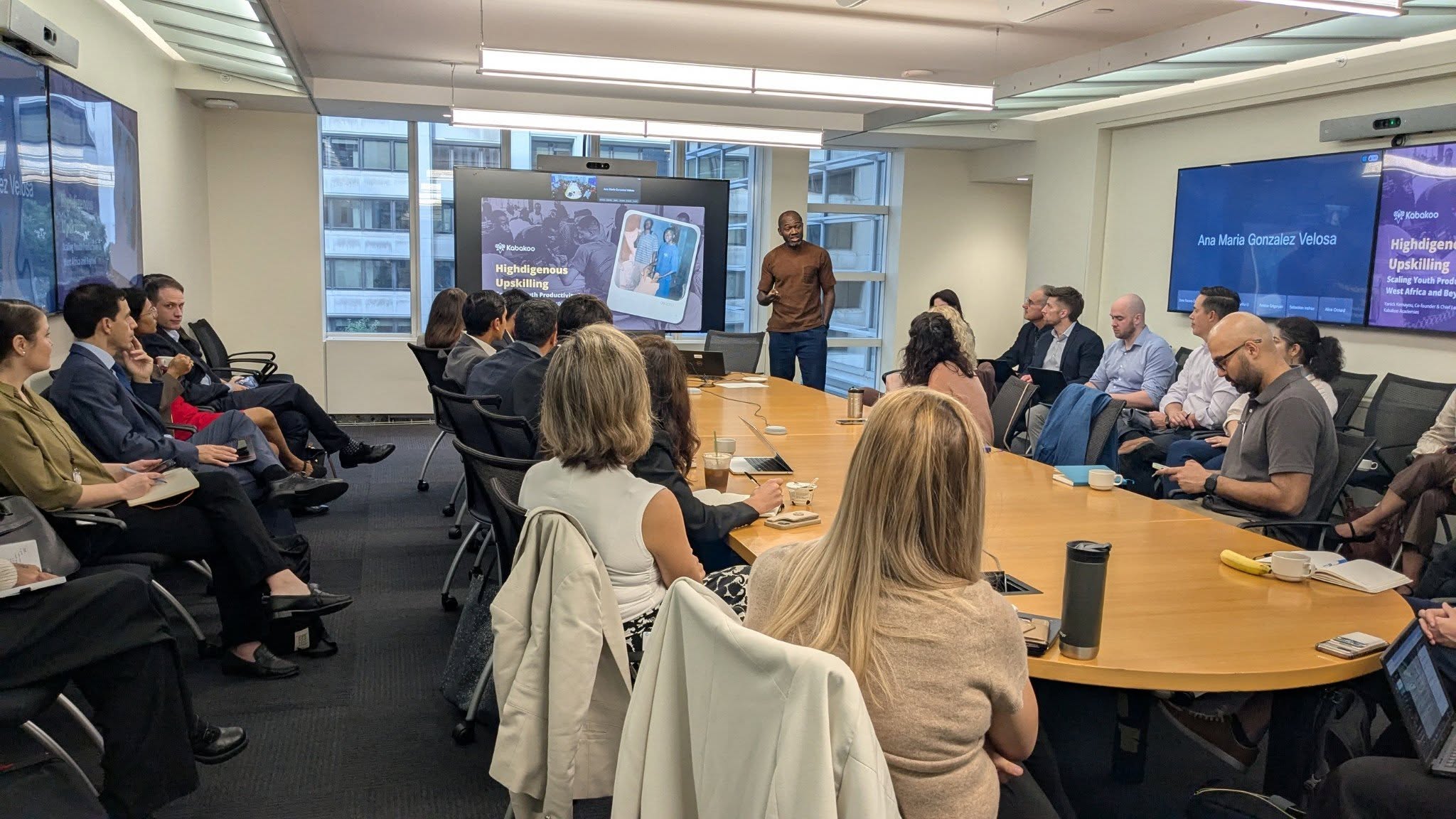
Building on that, we had the opportunity to present our work at the World Bank in Washington, D.C., and discuss with World Bank’s staff about how our model can be adapted and replicated across public systems. Discussions focused on the practical mechanisms that make the Kabakoo upskilling approach effective, illustrating how AI-powered mentoring, peer learning, and mindset transformation can together unlock youth productivity, at scale.
Radical care in action: Bamako.ai, Season #3
September gave us the space to breathe and look back on one of our most powerful moments of the year: Bamako.ai, Season 3. During the three days of the event, Kabakoo became a living laboratory of possible futures, where endogenous knowledge met AI, XR, and regenerative practices. Together, we asked: What if cities were designed to heal? What if food was medicine in disguise? What if technology could listen, soothe, and care?
From AR hairstyles to a regenerative food court, from construction simulations and building a pavilion from 2000 hand-woven fans to circles of conversation on mental health, the festival turned these “what ifs” into lived experiences. More than 1,000 people took part to the event. Despite being an order of magnitude smaller than the previous edition (we have explained why here), this season generated deeper impact with a Net Promoter Score (NPS) of 60. This NPS surpassed last edition’s score (57) and demonstrated a stronger impression on participants, in a more limited setting than previously, with over 75 % of participants leaving inspired and ready to act, from creating new food businesses to building digital tools in local languages. Bamako.aithis year was indeed smaller, but apparently a more profound experience for the participants. As it goes, the limited the means, the stronger the expression.
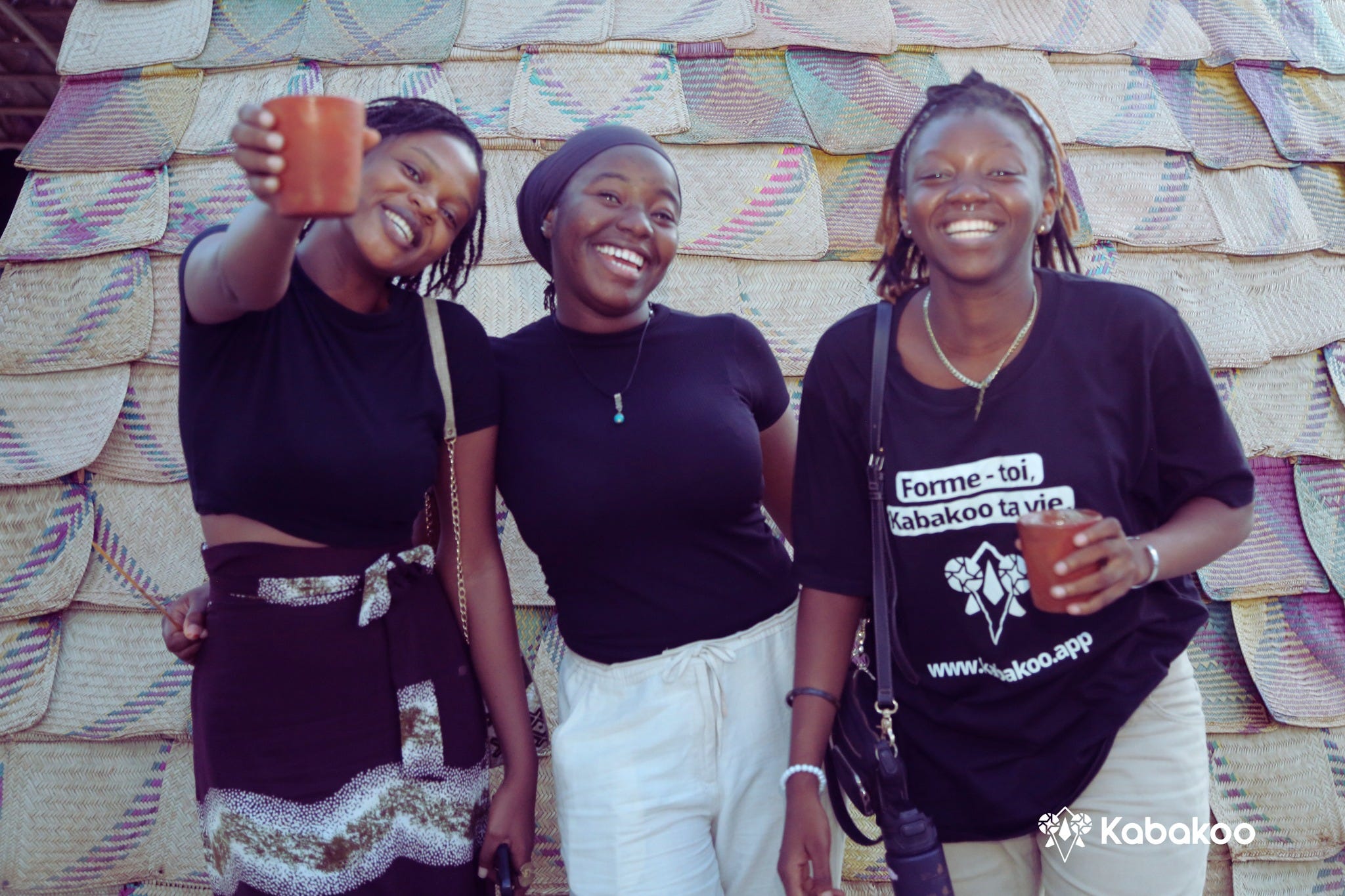
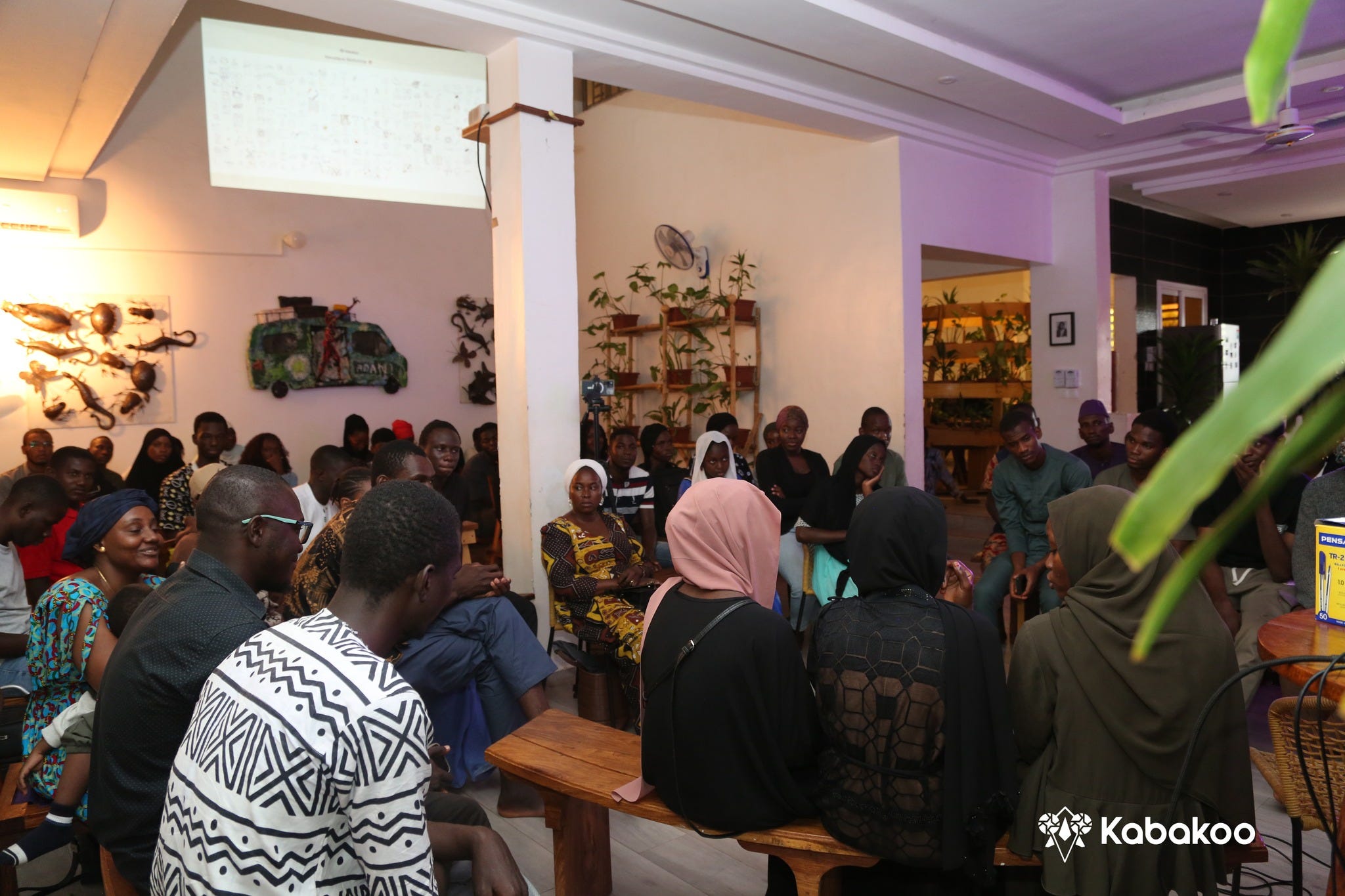
Bamako.ai, Season #3 ! Radical Care is Bae.
Radical Care was the guiding thread, but it resonated alongside two other themes: Collective Futures, reminding us of the power of pooling knowledge and efforts to withstand adverse situations and create new paths, and Highdigenous Intelligences, showing how centuries-old systems and cutting-edge tech can fuse to turn scarcity into regenerative power.
Across the Kabakoo co-learning space in Bamako, Radical Care unfolded in many ways. Among the highlights, the following five activities stood out, each offering a distinct way to experience radical care in action.
Sound Cares: Gen AI for personalized healing soundscapes
In a softly lit room, visitors sat down, answered a few questions about how they felt, and received AI-generated sound just for them. Sound Cares combined endogenous rhythms with generative AI to produce tailored soundscapes aligned with each person’s emotional and physical state.
The experience presented a dual design: individual sessions for deep introspection and collective sessions where groups experienced healing soundscapes together. This setup gave us the opportunity to test which context resonated most, i.e. in which setting the session has the large effect on participants’ self-assessed emotional state.
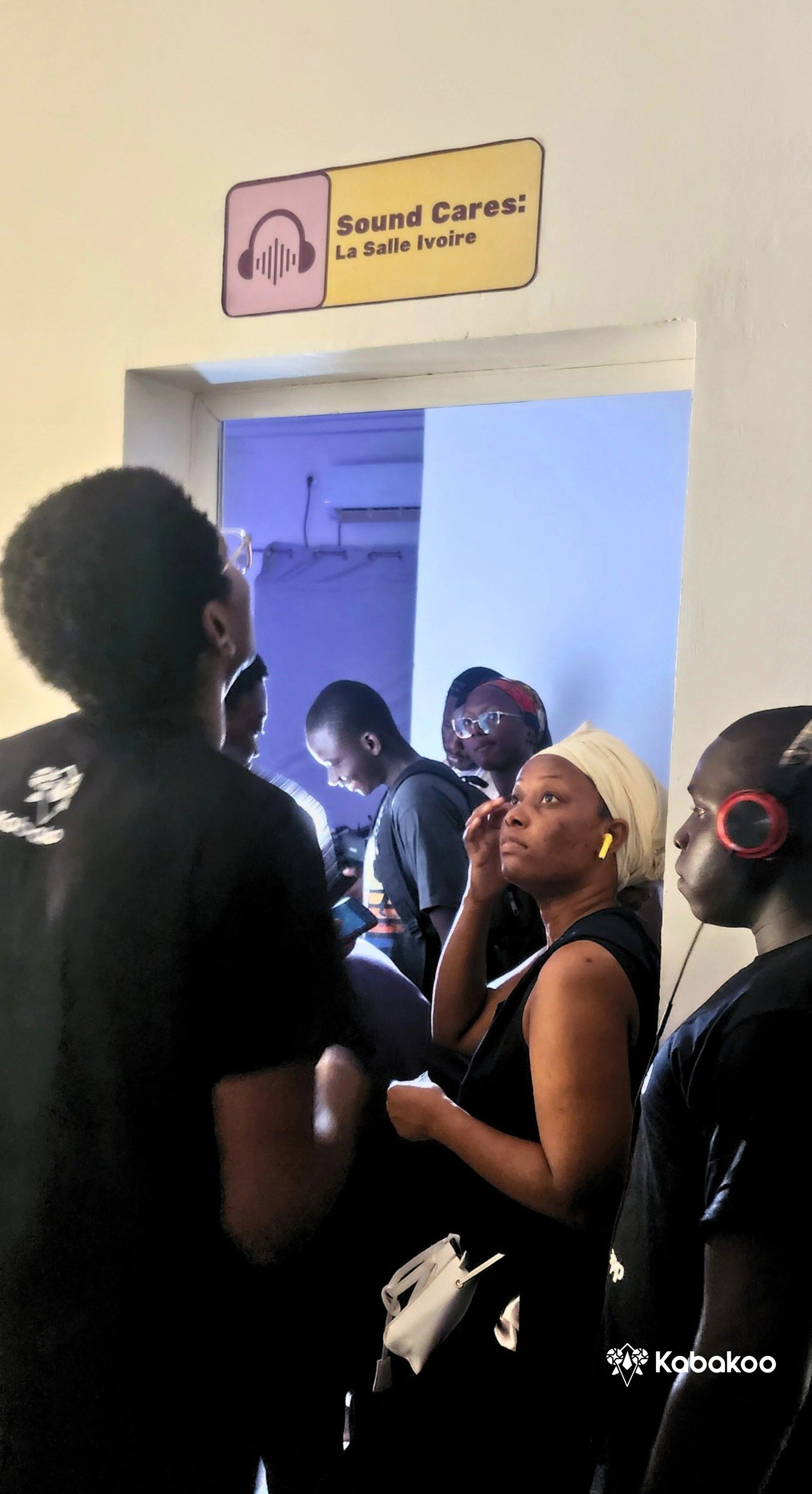
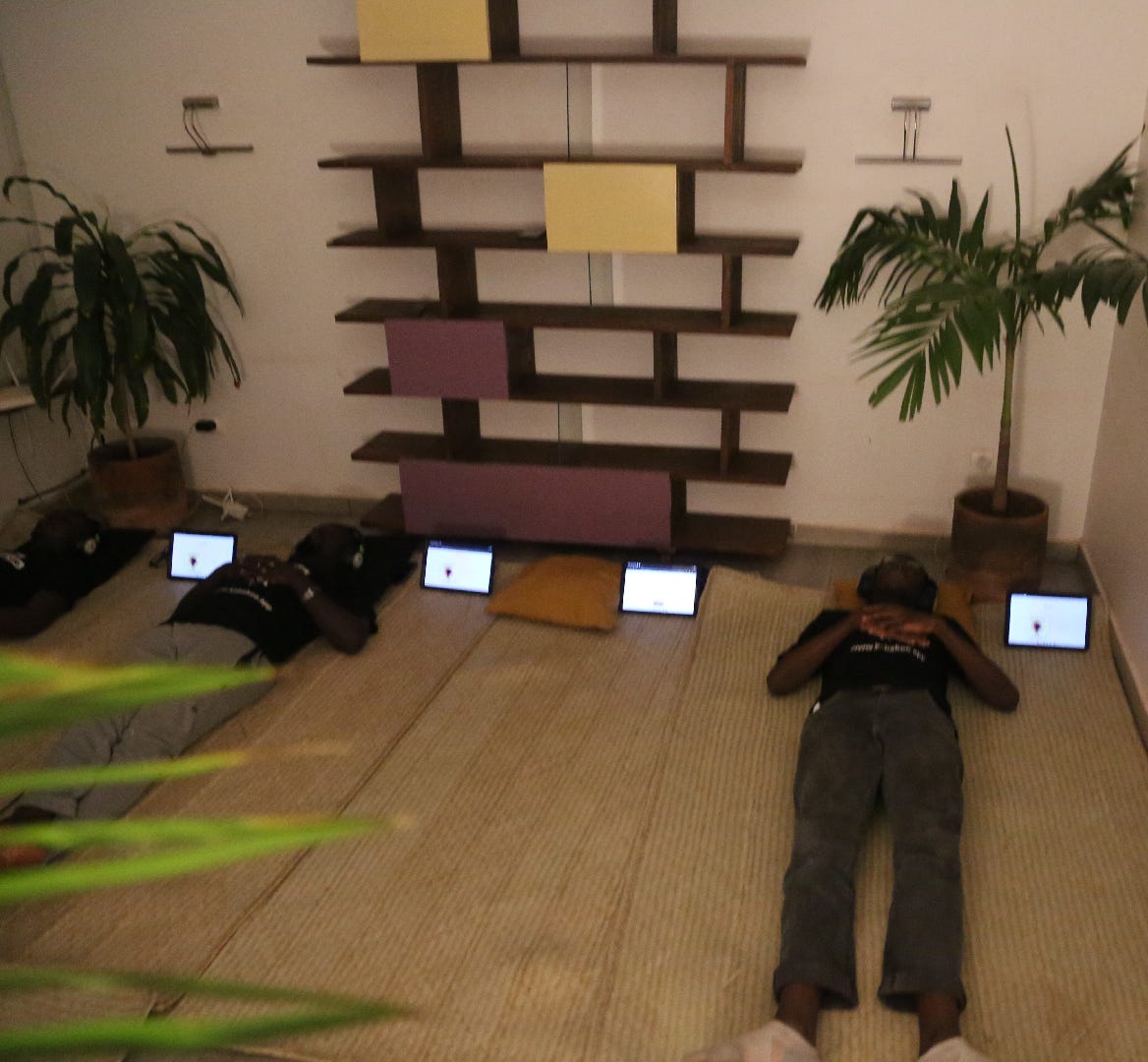
Participants waiting to start that Sound Cares session + View of a session
The sessions were short (25 minutes), but do seem to have some impact. Someone arrived anxious and left grounded; another walked in with a “heavy heart” and walked out lighter. A striking 89% of participants reported feeling calmer, more focused, or more connected after the sessions. Participants gave Sound Cares an overall average rating of 4.02/5, among the highest across all activities.
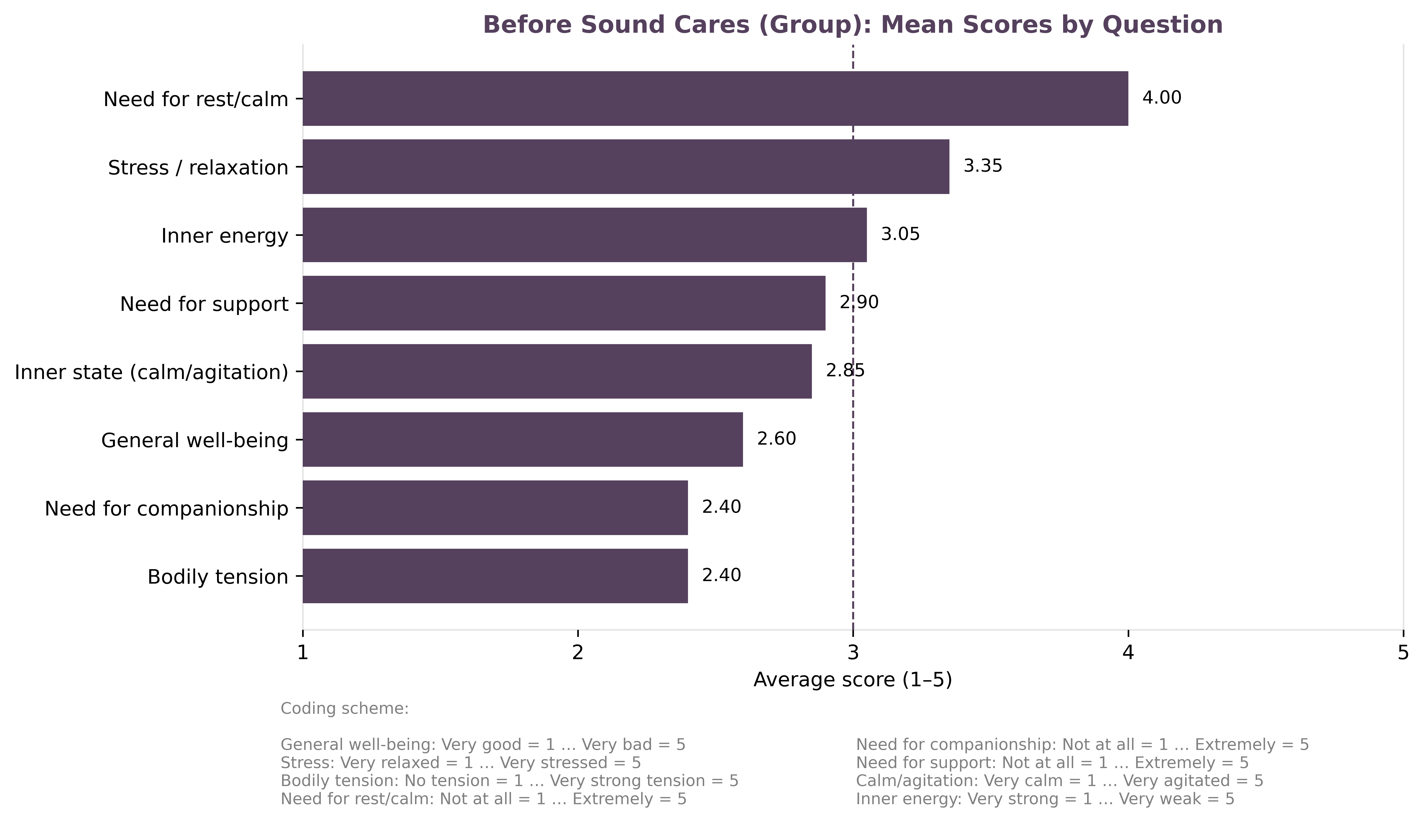
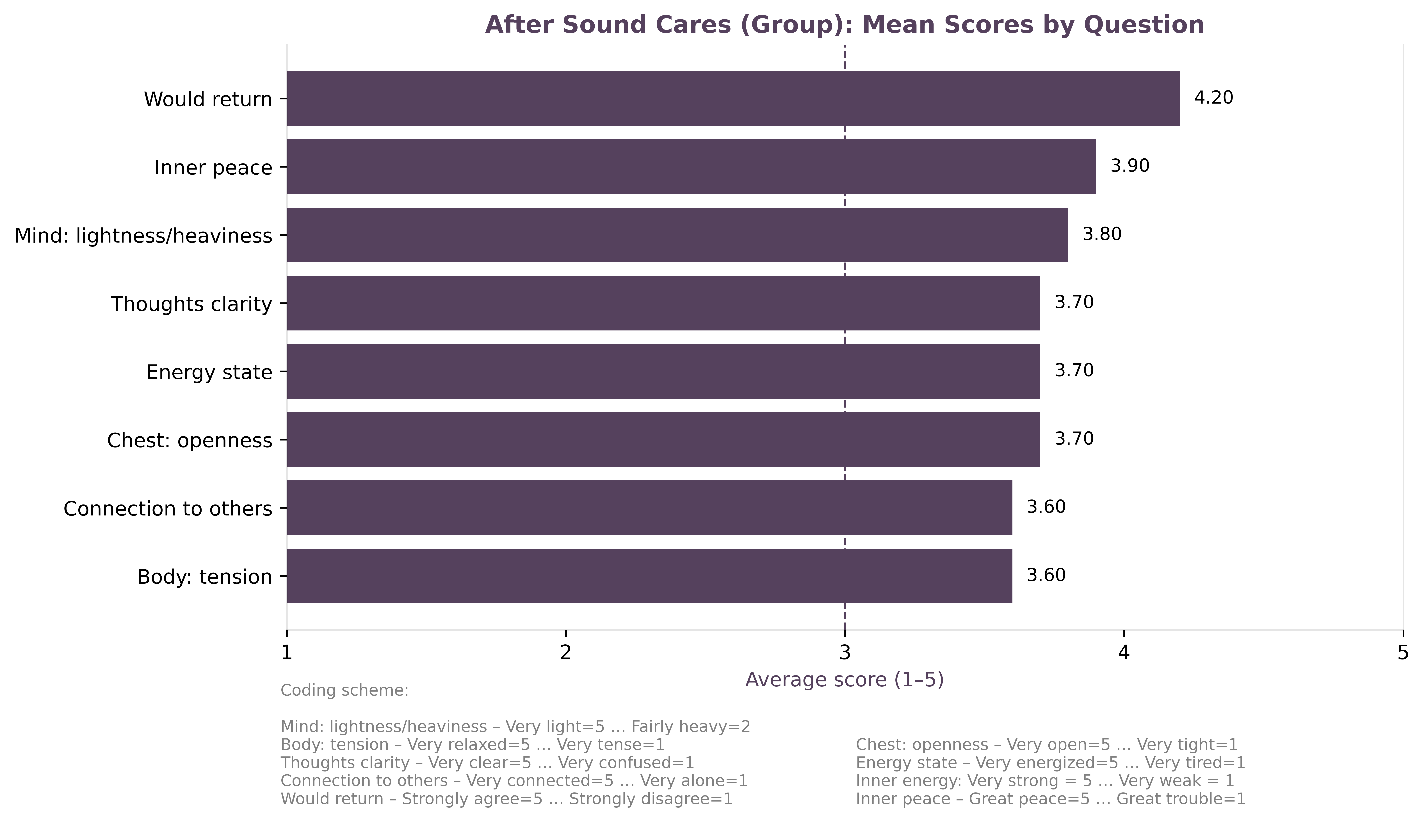
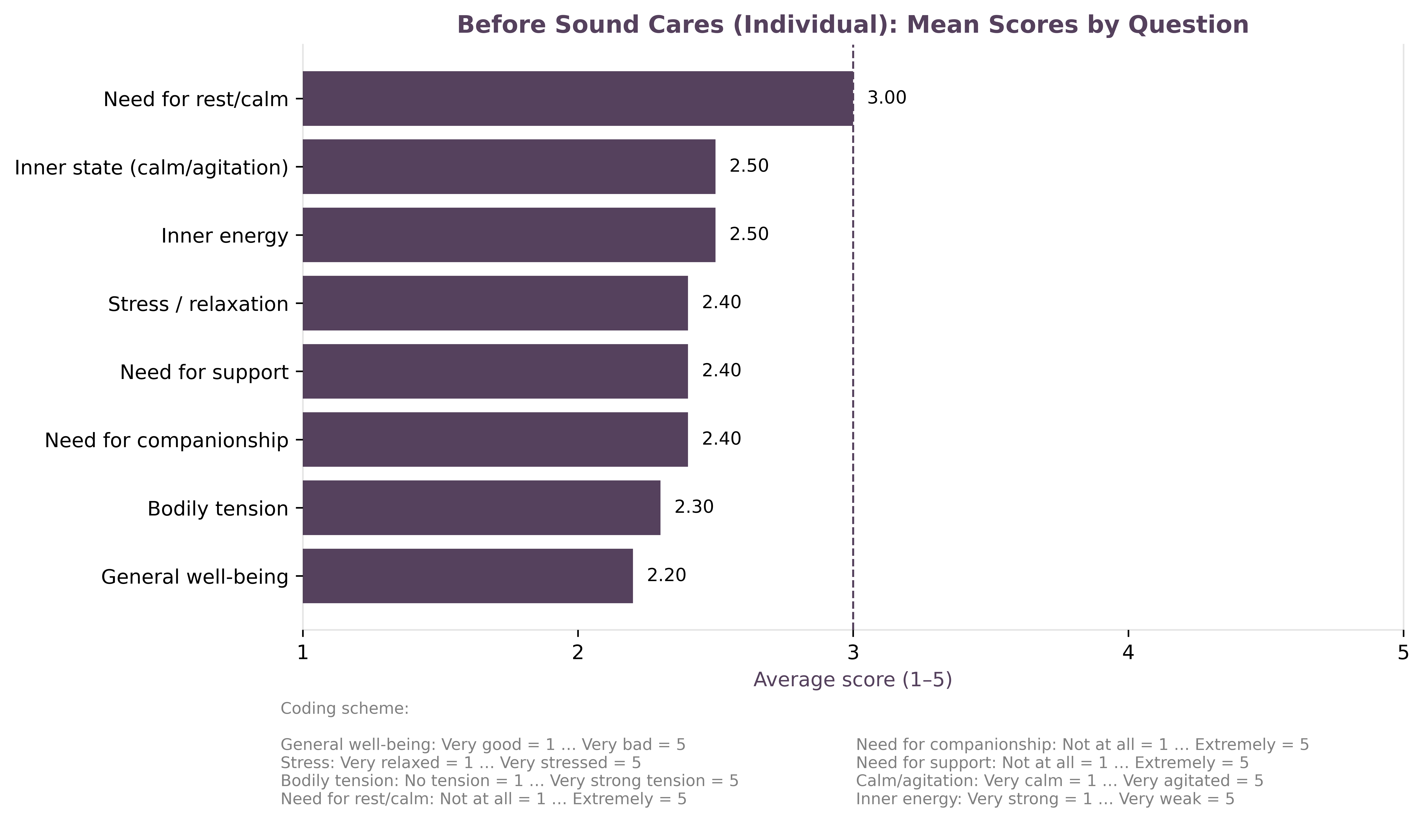
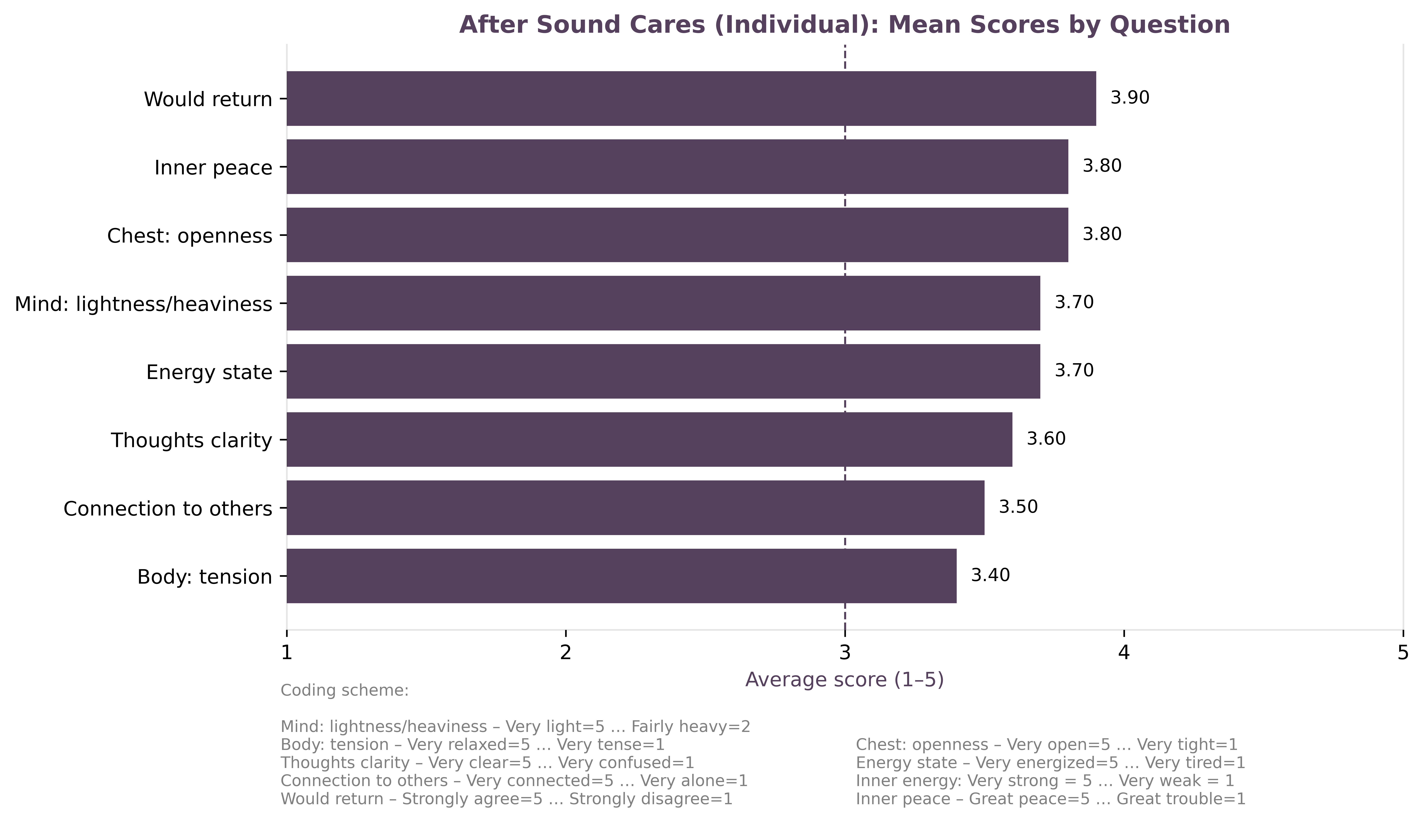
Sound Cares evaluation.
Circles and grins: care as conversation
Additionaly to ai-generated personalized soundscapes, Radical Care took another form: spaces for speaking, listening, and learning together, from each other. Bamako.ai’s discussion circles on individual and collective care, spanning mental health, nutrition and wellbeing, gave participants a rare chance to voice struggles and insights openly. The discussion circles were designed as grins, the informal, Sahelian-style semi-public gathering spaces.
Participants highlighted these exchanges as some of their most memorable moments. In the post-event survey, one participant shared that they are envisioning creating a “therapeutic community through grins of conversation” such as the ones during Bamako.ai.
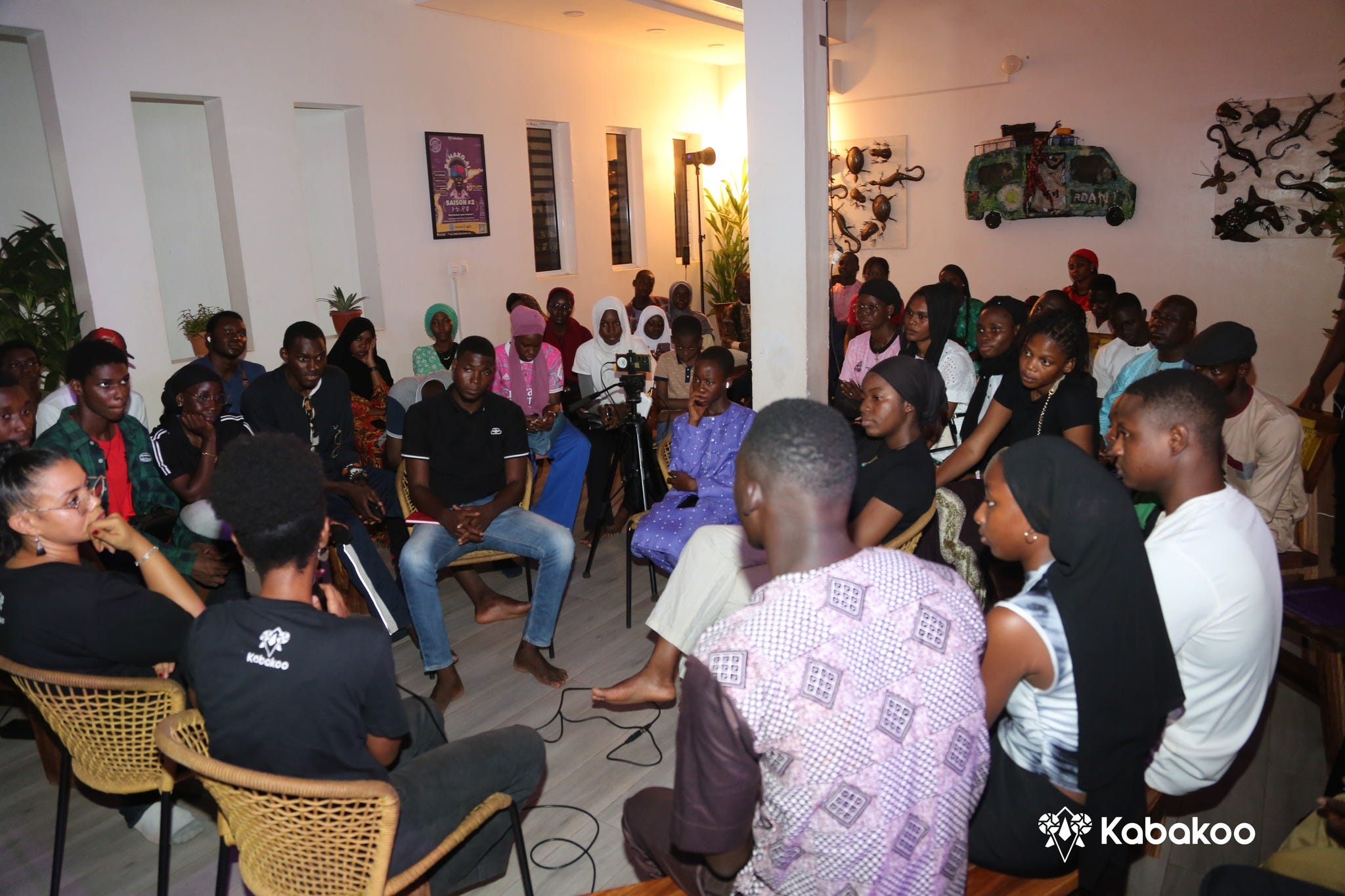
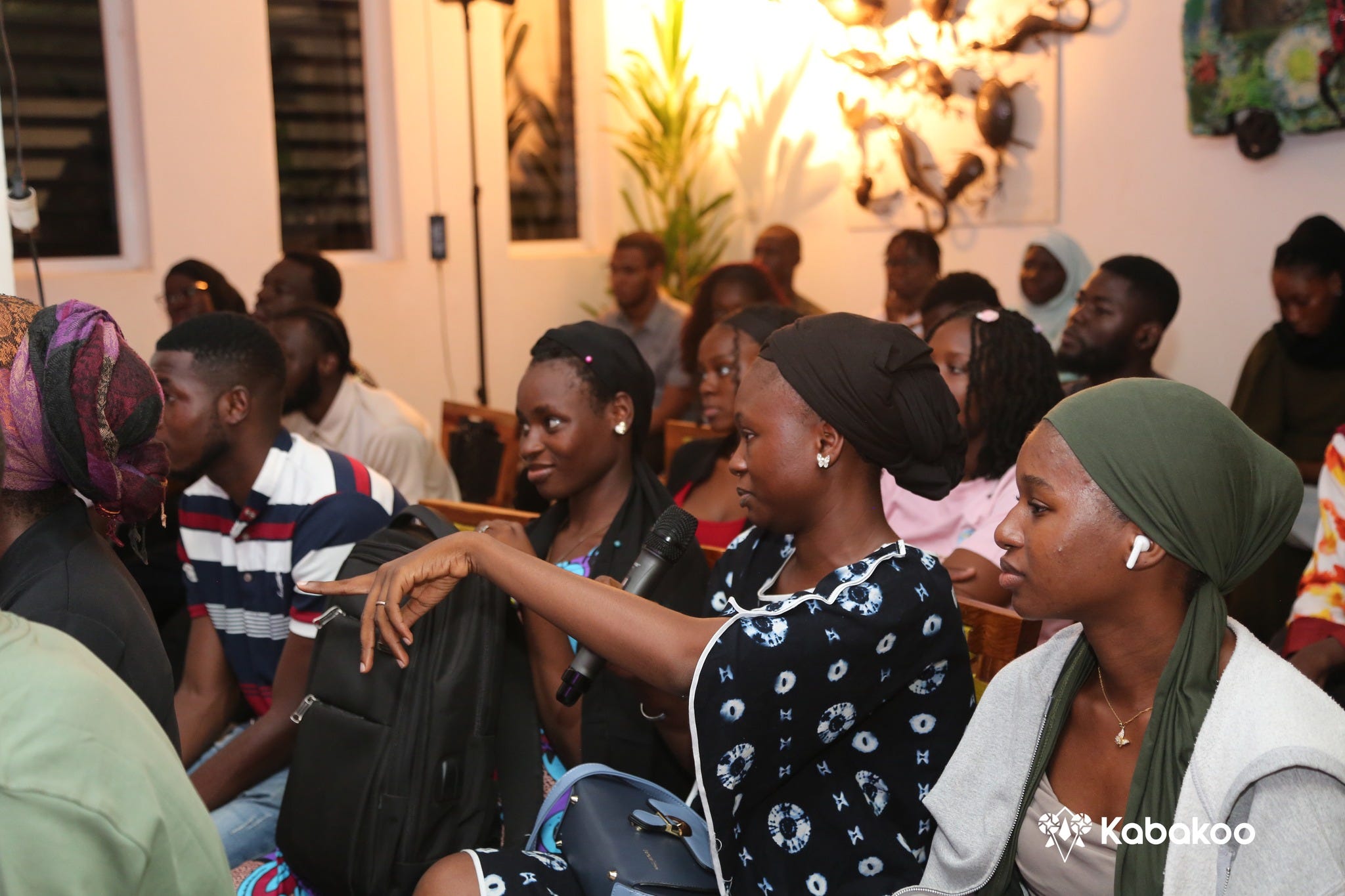
Grins (discussions circles) during Bamako.ai, Season #3
During the grins, participants shared experiences about food, health, technology, and work. You can have a quick view into the authentic vibe of these conversations here.
Everyday care, celebrated
Care took a tangible form in multiple hands-on workshops. For instance, sessions on hair care based on indigenous crops and produces drew large groups, not only young women!, who learned to reclaim beauty rituals as acts of well-being. “Taking care of the head, starting with the hair,” one participant noted, was not only about beauty, but about reclaiming confidence and grounding wellness in daily life.
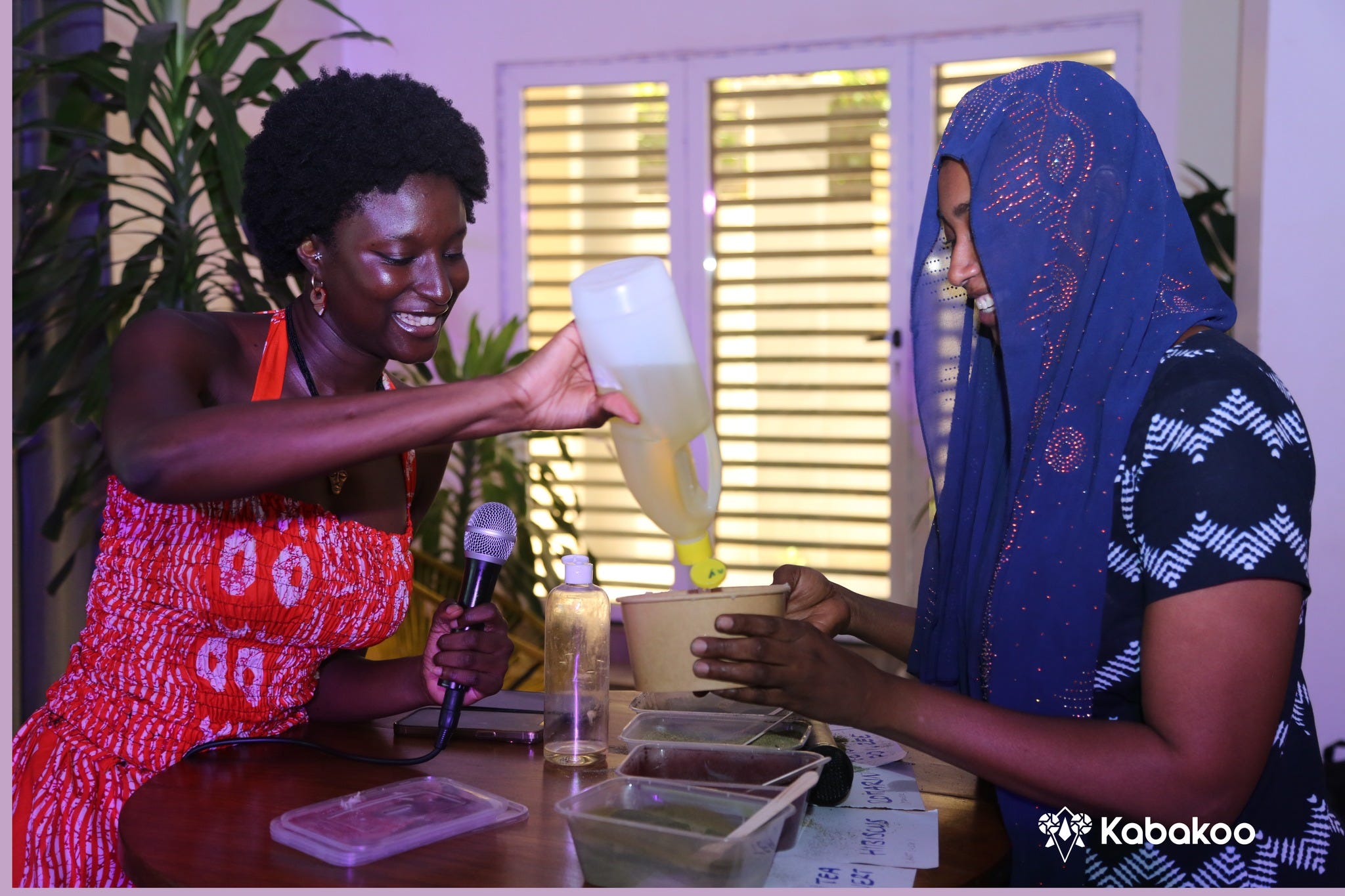
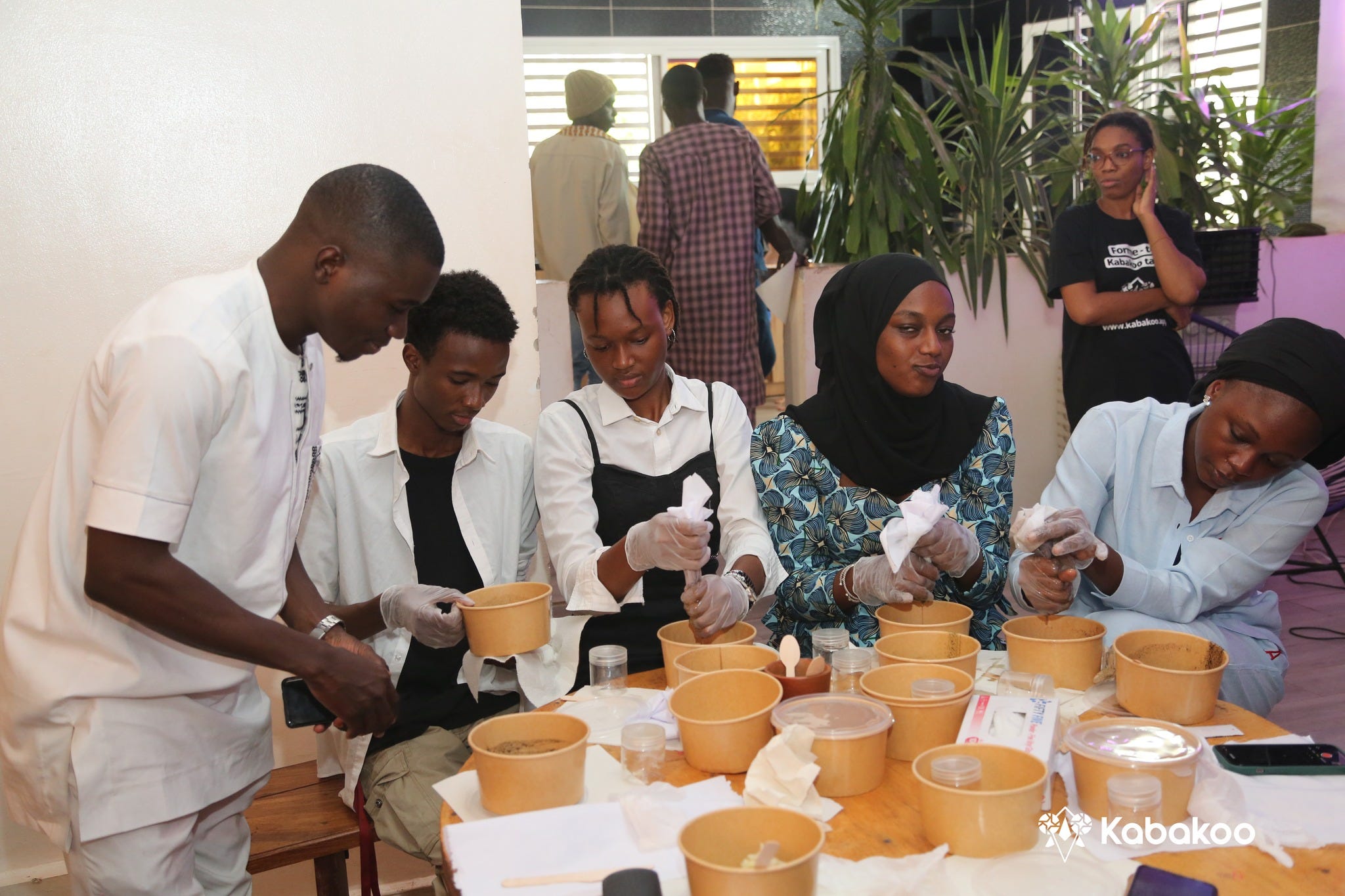
Radical (hair) Care at Bamako.ai, Season #3
So Ni Kènèya: The Caring House
Among the other most impactful experiences at Bamako.ai Season 3 was So Ni Kènèya(The Caring House), an interactive installation that invited participants to explore sustainable architecture through the lens of thermal comfort and local materials.
The experience combined physical and digital elements. Participants built model houses using different materials and elements, from raw earth and cement to vegetalized roof and air conditioning, represented by custom-made wooden blocks. They then input their material combinations into a web application, which calculated and displayed the thermal comfort via a visual thermometer, an estimated price, and generated an AI visualization of a aesthetically pleasing house using those chosen materials.
The goal was clear: to demonstrate that local, regenerative materials can deliver exceptional thermal comfort, beautiful architectural designs, and cost advantages.
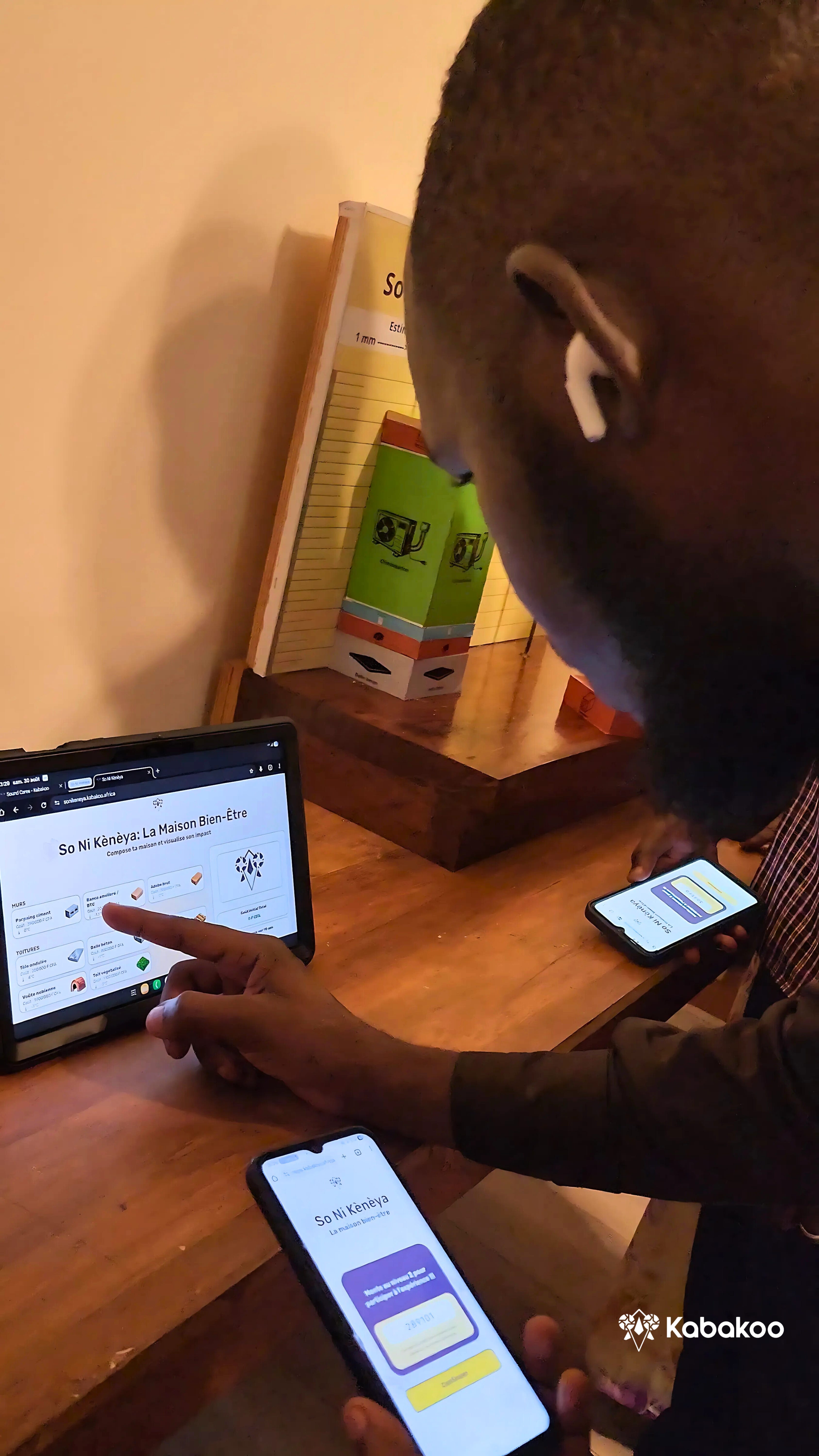
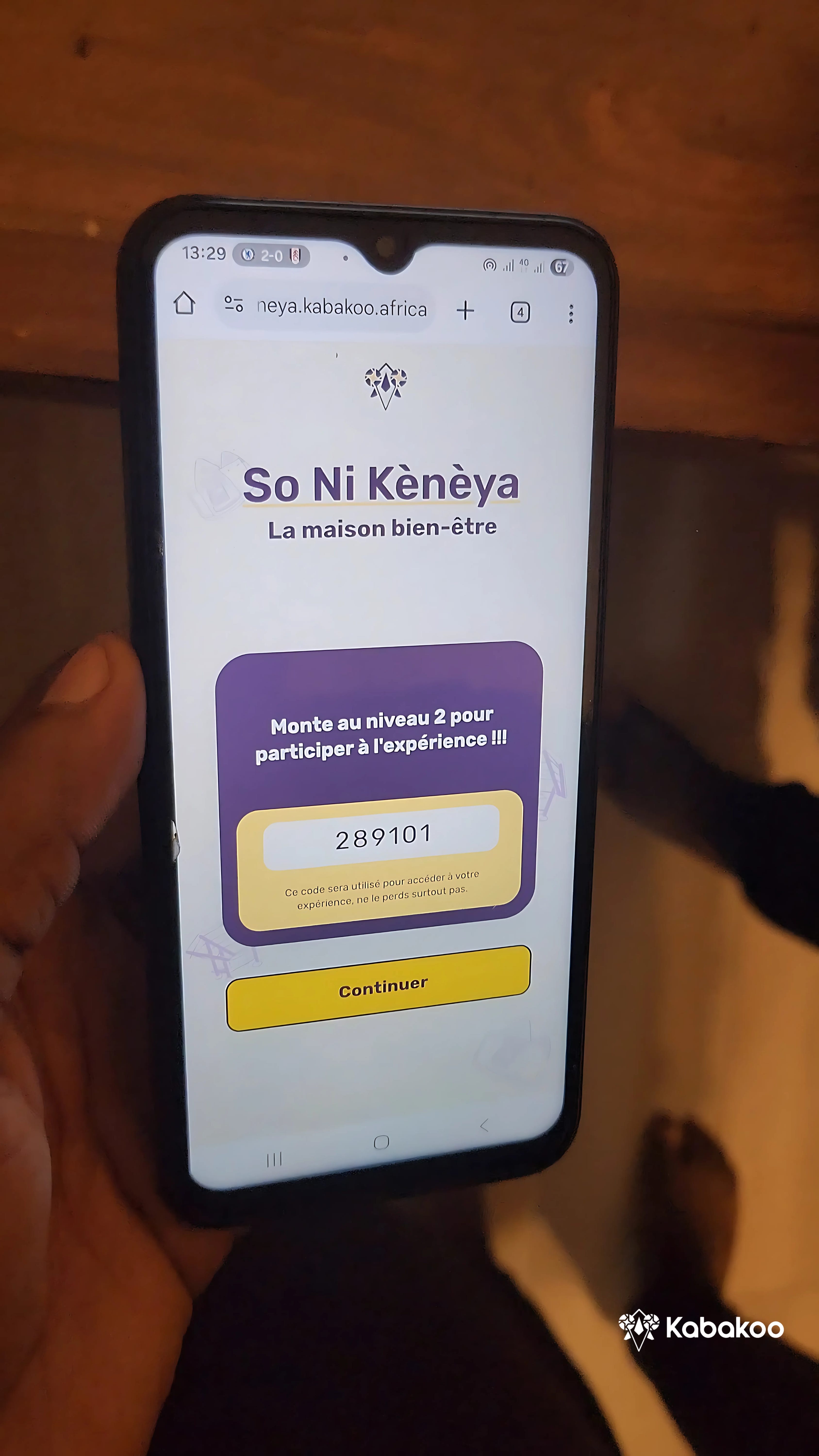
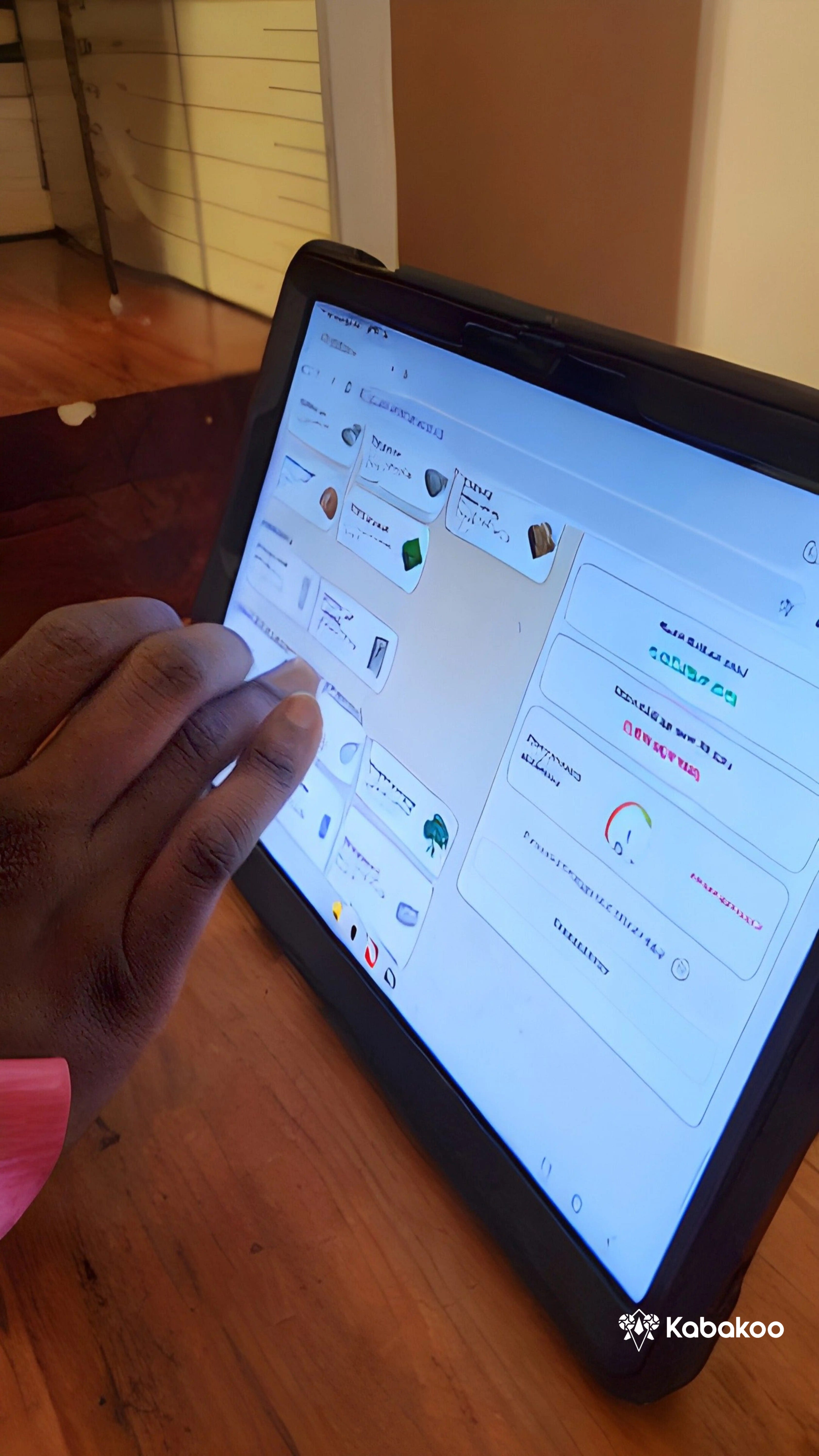
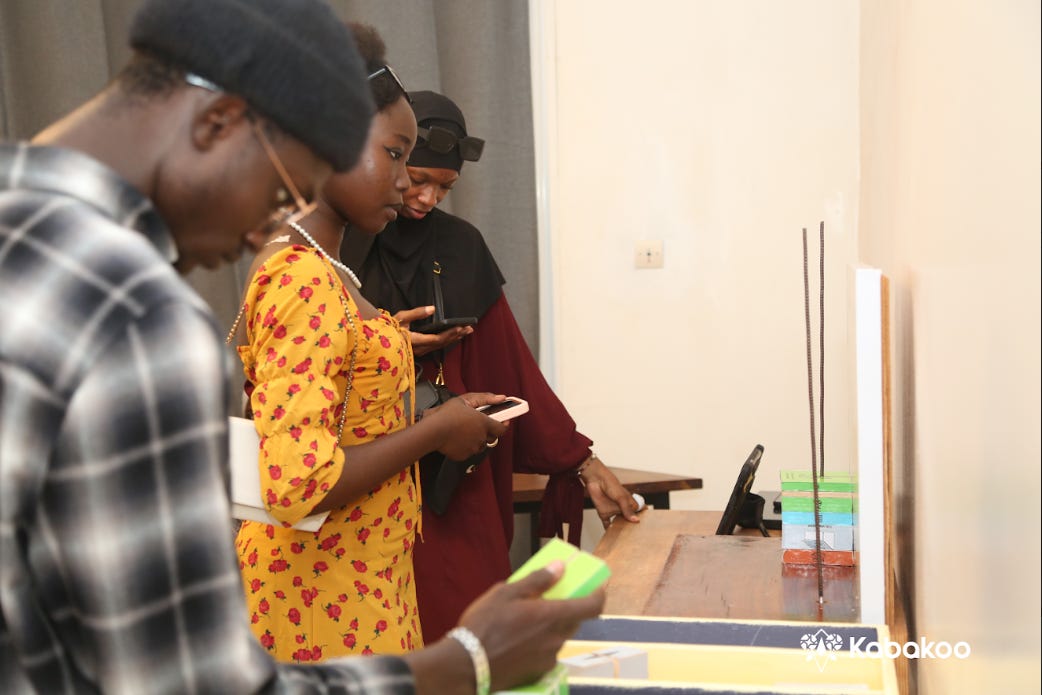
A physical-digital interactive installation using Gen-AI, wooden blocks, and a web app to ignite conversations around local architecture and materials; and new avenues for value creation.
In the post-event survey, one participant shared their intention to “mettre en place une conception pouvant donner une estimation de la maison” (set up a design system that can provide house estimates), directly inspired by the So Ni Kènèya experience. Others expressed interest in exploring regenerative architecture and local construction materials further, showing how the installation sparked concrete project ideas.
The experience proved that AI-generated visualizations combined with practical calculation tools can be a powerful advocate for endogenous knowledge and sustainable practices; thereby opening new avenues for value creation.
Gen-AI as a tool for culturally embedded learning and storytelling
Bamako.ai, Season #3 showcased La Voie du Donsoya, an AI-generated mini-series of eight episodes presenting Sirankomi, an epic from the Donsoya, one of West Africa’s oldest knowledge systems. What began as a productivity hack, building a virtual team of AI agents to support Kabakoo’s tech team, unexpectedly evolved into something else: a cinematic production crew of AI agents, organized to prompt, direct, and render a full cultural experience under the control of Kabakoo staff as mentors and a group of learners.
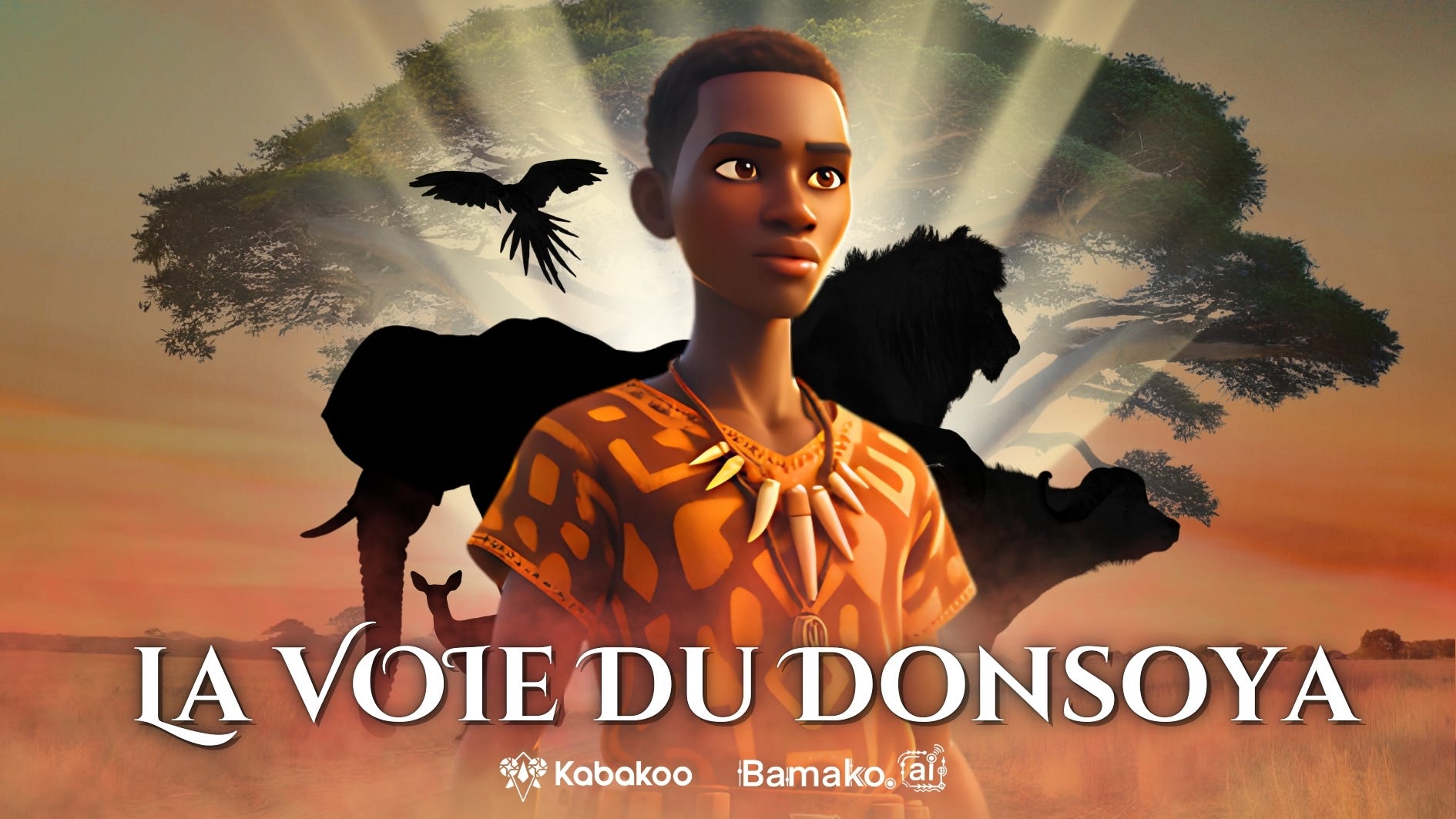
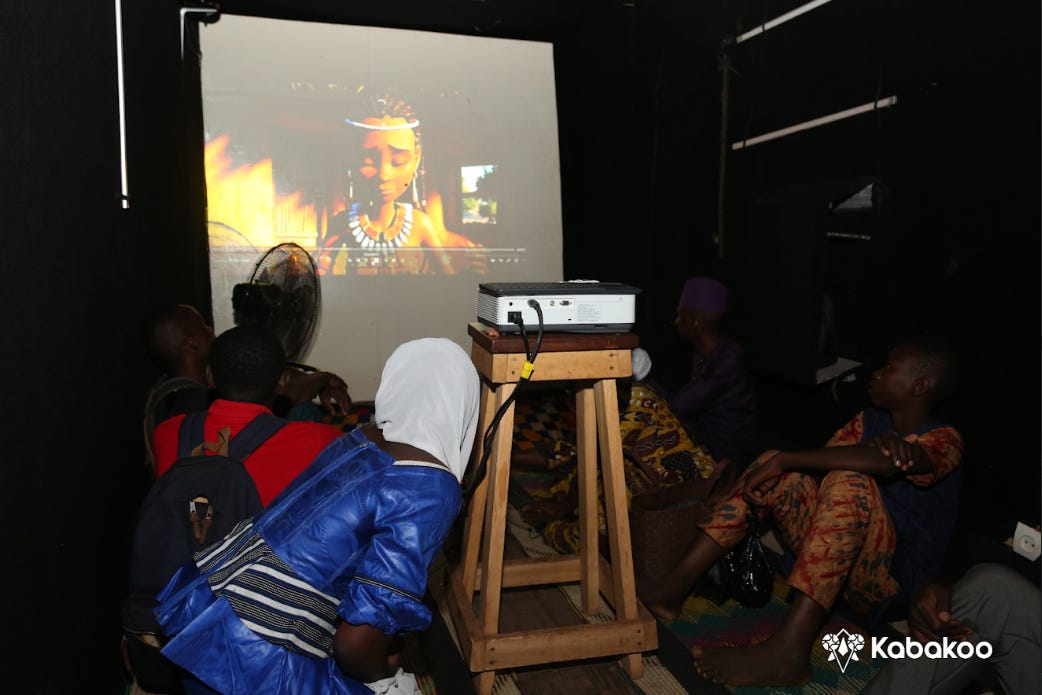
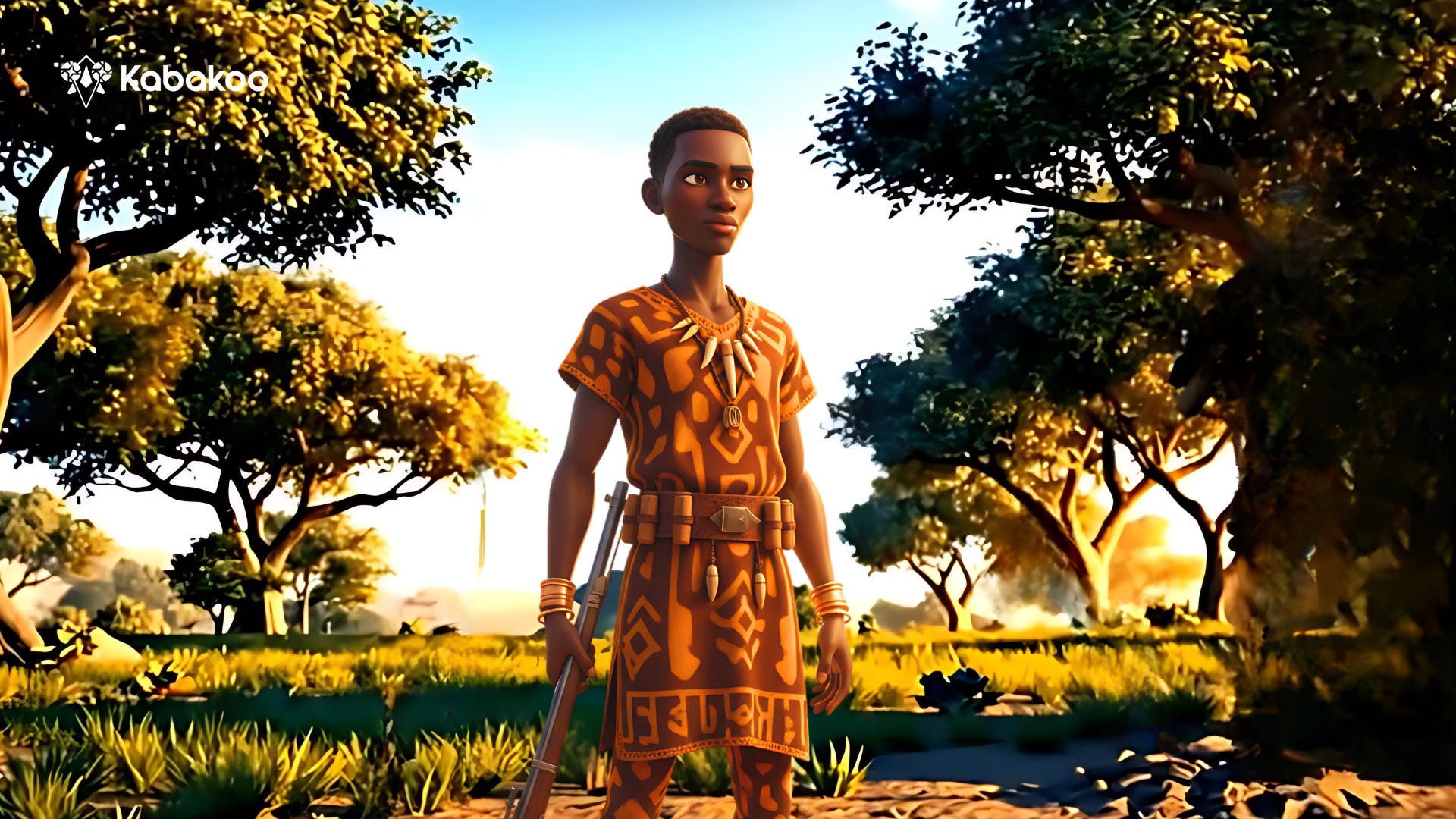
La Voie Du Donsoya. A short animation series based on an epic from the Donsoya, one of the oldest West African knowledge systems.
The ambition was to see if fast evolving generative AI tools, often built far from our realities, could be reclaimed to serve our communities. The process was far from smooth as we ran into biases everywhere, cultural blind spots, gender and cultural stereotypes, narrative distortions.
The group of Kabakoo learners in charge of the project stepped in, refining scripts, correcting imagery, and ensuring that the Donsoya, centuries of ecological wisdom, care for nature, and communal resilience, was portrayed a culturally attuned way.
The result is a striking demonstration of the use of generative AI as cultural amplifier showing that the future of AI can also lie in the voices it helps carry forward and the contexts it can respectfully serve.
Bamako.ai: celebrating the Highdigenous while getting our skills up to speed
This third edition confirmed Bamako.ai as a global pioneer: the first festival of its kind, reimagining AI and society through the lenses of care, collectivity, and highdigenous creativity. Check here the video capturing the joy and smiles from participants in a celebration of innovation and community spirit.
Beyond its role as a festival and our flagship event, Bamako.ai, Season 3 served as another intensive innovation and implementation lab for the Kabakoo team. Each edition of Bamako.ai pushes the boundaries of what is possible through ambitious stretch goals, requiring our whole team to rapidly prototype new experiences and master emerging technologies. Through the development of projects like Sound Cares, La Voie du Donsoya, and So Ni Kènèya, our team developed critical competencies in multi-agent AI orchestration, culturally-contextualized prompt engineering, interactive experience design, real-time data integration, physical-digital experience design, etc. These innovation sprints ensure that each Bamako.ai season doesn’t just serve festival participants, it strengthens our capacity to build technology that truly serves West African communities.
We’re hiring ! Help us find our next crew member
We’re growing the Kabakoo team and looking for exceptional people who want to build technology that truly matters. Go through our offers here.
Our top search right now: a Senior Engineering Manager to fast-track our technical roadmap.
It’s definitiely an opportunity to work on problems that haven’t been solved before (multilingual Gen AI for low-connectivity environments with a UNESCO-acclaimed pedagogy in low-resource languages, anyone?).
If you know someone who thrives on constraints, loves mentoring, and gets excited about offline-first design, multilingual GenAI, and meaningful engineering, send them our way!
Kabakoo Faces
(With over 35,125 registered learners, each month we spotlight a member of our vibrant community)
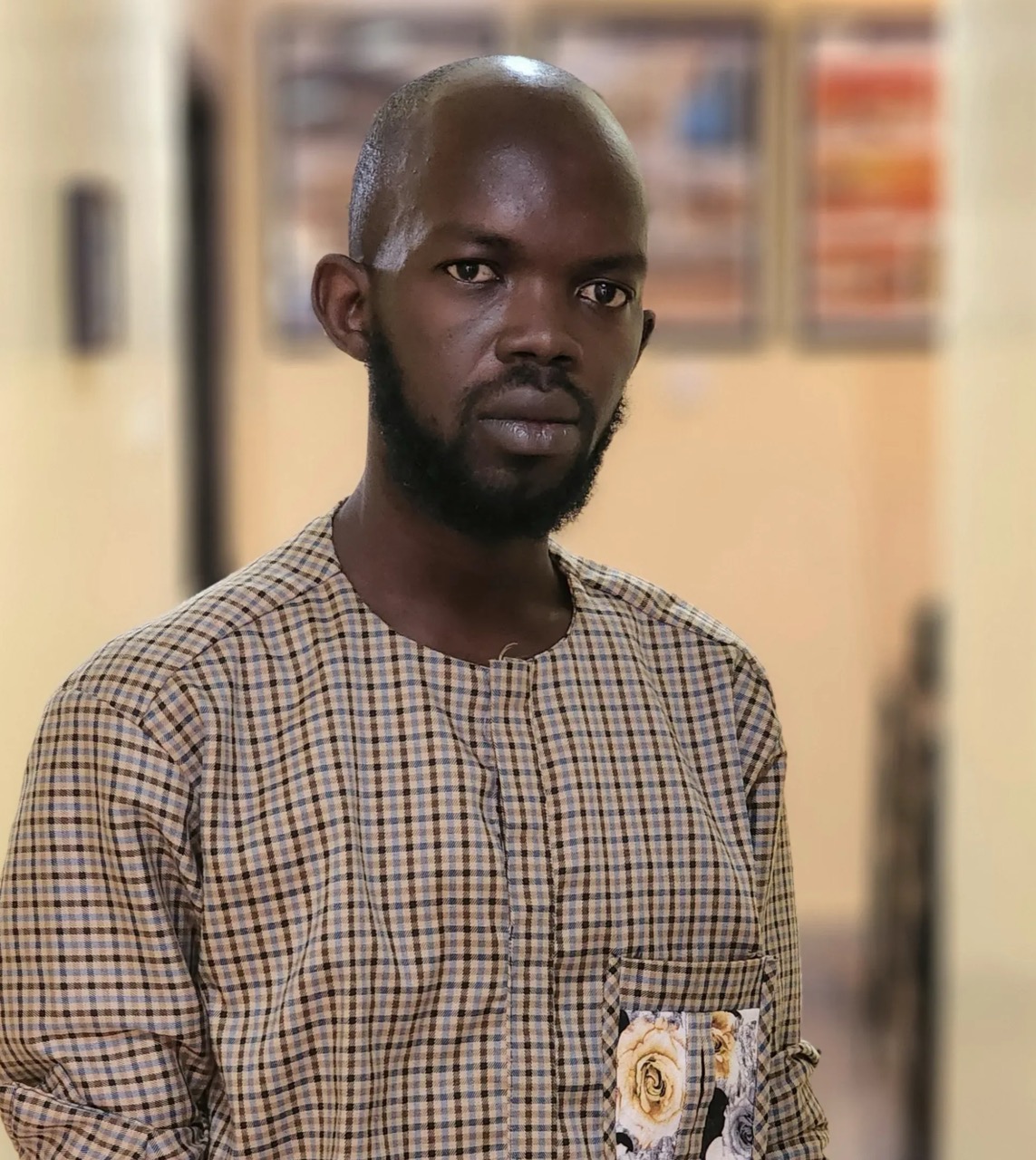
Before Kabakoo, Hachimine juggled several small jobs, “chasing income wherever possible” as he says. He discovered Kabakoo on social media and joined the community during Bamako.ai, Season 1 in 2023. Soon after, he applied to join a Kabakoo cohort.
From his perspective, our mindset-oriented modules had the strongest effect on him. By the end of the program, Hachimine had found his path: creating digital content. When Kabakoo later opened an internship opportunity in production, he immediately jumped in.
As he says in this video: “The difference between the Hachimine of today and the one from two years ago is huge. Kabakoo has taught me to keep growing, to keep learning, and to believe that transformation starts from within.”
Thank you for reading to the end! 💜🧡
Michèle & Yanick
P.S.: We are thinking about setting up a Spotify-playlist with all the songs we have been sharing in the last years via our newsletters. Let us know if you might be interested :-)


