%20-%20Grande.jpeg)
Hi from Lomé, but Oxford-bound. Next week, we will be at the Skoll World Forum, together with Marlène, our Partnerships & Biz Dev Lead. More on that at the end. Let’s first get into our thick month of data and discovery.
🎵 Our song for this month is pure pop: One Track Mind by Naïka. When Afrobeats meets Haitian konpa. We just loooove the vibes!
What are we building?
Kabakoo designs and scales evidence-based pathways for West African youth, integrating AI, community, and cultural insights to foster the mindset and skills essential for achieving economic mobility and driving systemic change in informally dominated economies.
☀️ April 2026 Highlights
Kabakoo joins the Agency Fund Accelerator
You may remember the exclusive news we teased in our February update); it’s now official and public. Kabakoo has been selected for the second cohort of the Agency Fund Accelerator. The first cohort was launched last year as a program organized by The Agency Fund in partnership with OpenAI and the Center for Global Development.
We’re one of seven organizations in the cohort, placed in the Livelihoods cluster alongside African Management Institute and One Acre Fund. The Health cluster includes Intelehealth, Living Goods, and Maisha Meds. Adalat AI rounds out the group in Citizen Services.
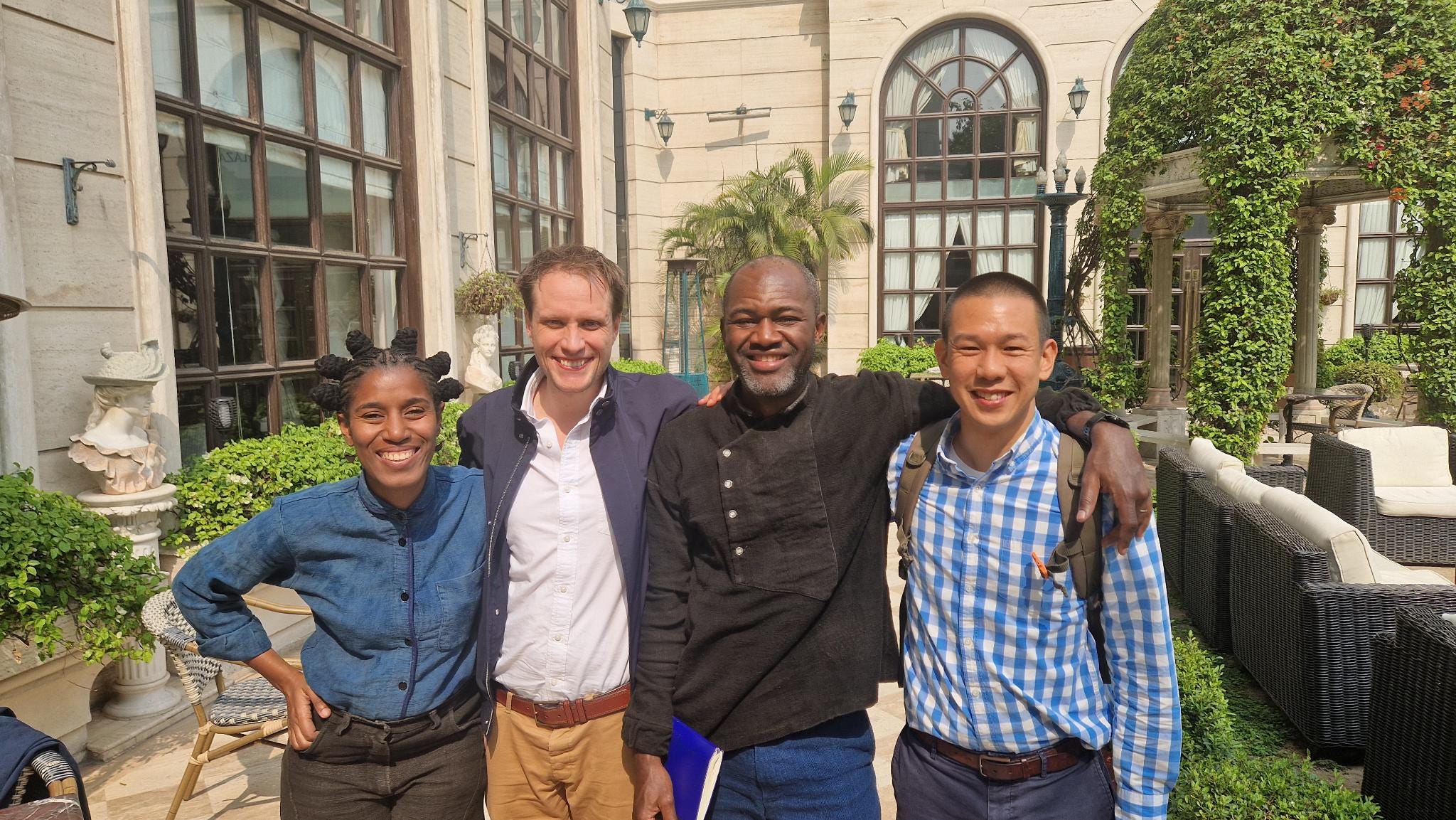
The real differentiator of this accelerator is that The Agency Fund embeds top-notch engineers and behavioral scientists directly into our team, working in sprints to co-design and stress-test our data infrastructure, AI tools, user funnels, and products. Since we already run A/B tests, for instance, on onboarding videos (more on that below), this is the kind of partnership that actually matches how we work.
Not just who youth trust, but why: decoding 5,122 answers
Our Mali Youth Trust Survey has appeared in these pages before. You might recall the headline: parents scored 2.9 out of 3, teachers 2.3, close friends 2.0. Social media influencers 0.6. That data reshaped our entire distribution strategy, from a failed influencer campaign (10 million combined followers, 300 registrations) to the hyperlocal trust-based approach we are currently testing.
We analyzed 5,122 open-ended responses where young people explained, in their own words, why they trust specific actors to influence their decisions about skills, education, and entrepreneurship. We coded each response across categories using a theory-informed taxonomy, covering competence, emotional support, inspiration, authority, shared identity, and material support.
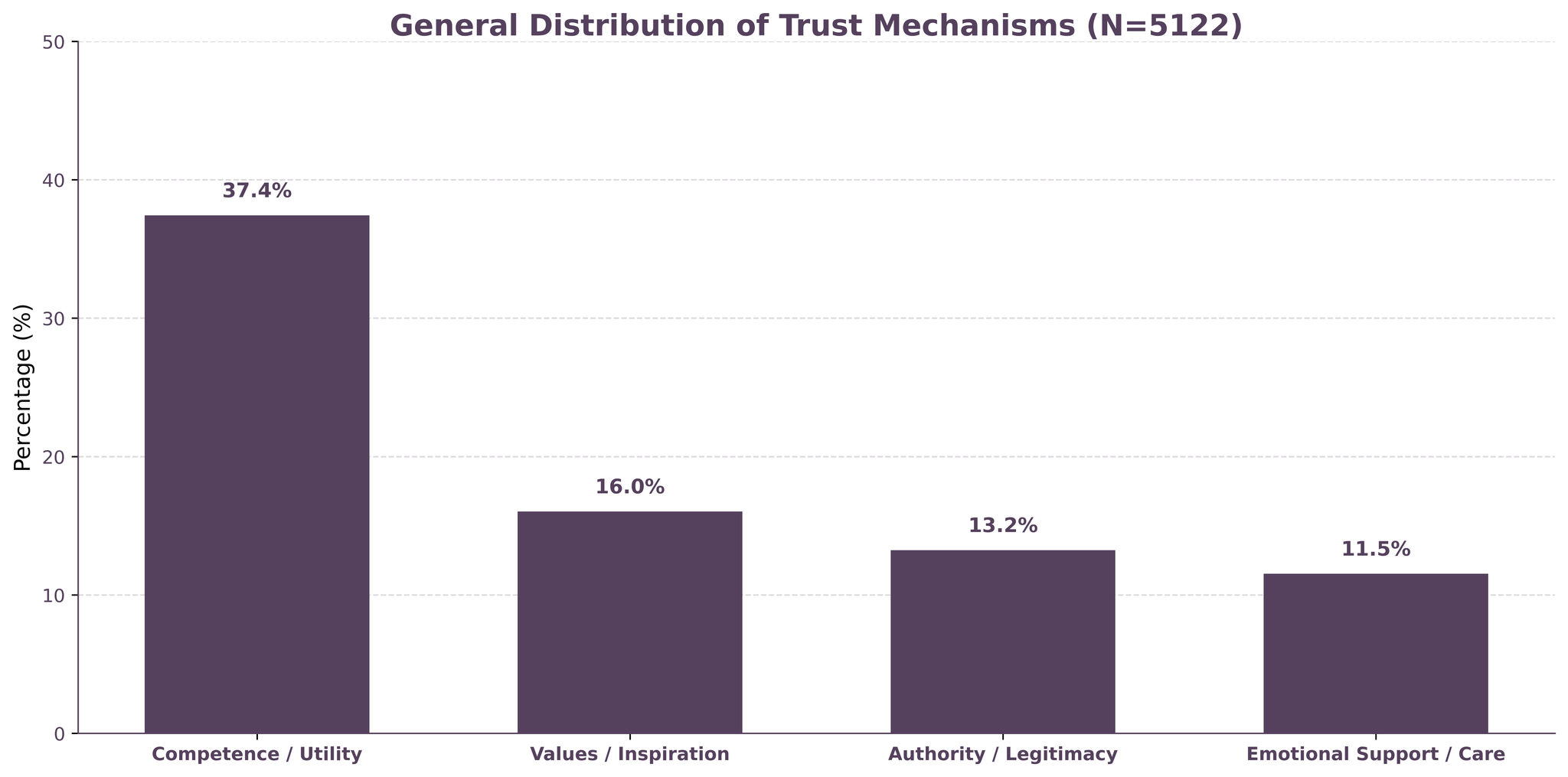
The top-line is that competence and perceived utility dominate. 37.4% of all coded responses cite the belief that the trusted entity has the skills and knowledge to actually help. Values and inspiration come second (16.0%), followed by authority and legitimacy (13.2%), then emotional support (11.5%).
Interestingly, the reason for trust shifts depending on who you’re talking about.
When youth explain why they trust a person (a parent, a teacher, a friend), competence still leads (40.7%), emotional support comes second at 23.7%. When the trusted entity is an institution (government, NGOs), competence drops to 33.6% and values/inspiration rises to 22.8%. And when youth explain trust in media (national TV, radio), the combination flips: competence (40.3%) plus authority (28.5%), with almost no emotional dimension.
The entity-specific profiles are sharper still. Teachers score the highest competence rating of any actor with 62.5%. Parents are trusted primarily for emotional support (38.1%) and moral guidance (20.1%). ORTM, Mali’s national broadcaster, derives nearly half its trust (48.4%) from authority and legitimacy alone. And NGOs stand out for the highest material/financial support attribution (21.6%) alongside their competence score (50.8%).
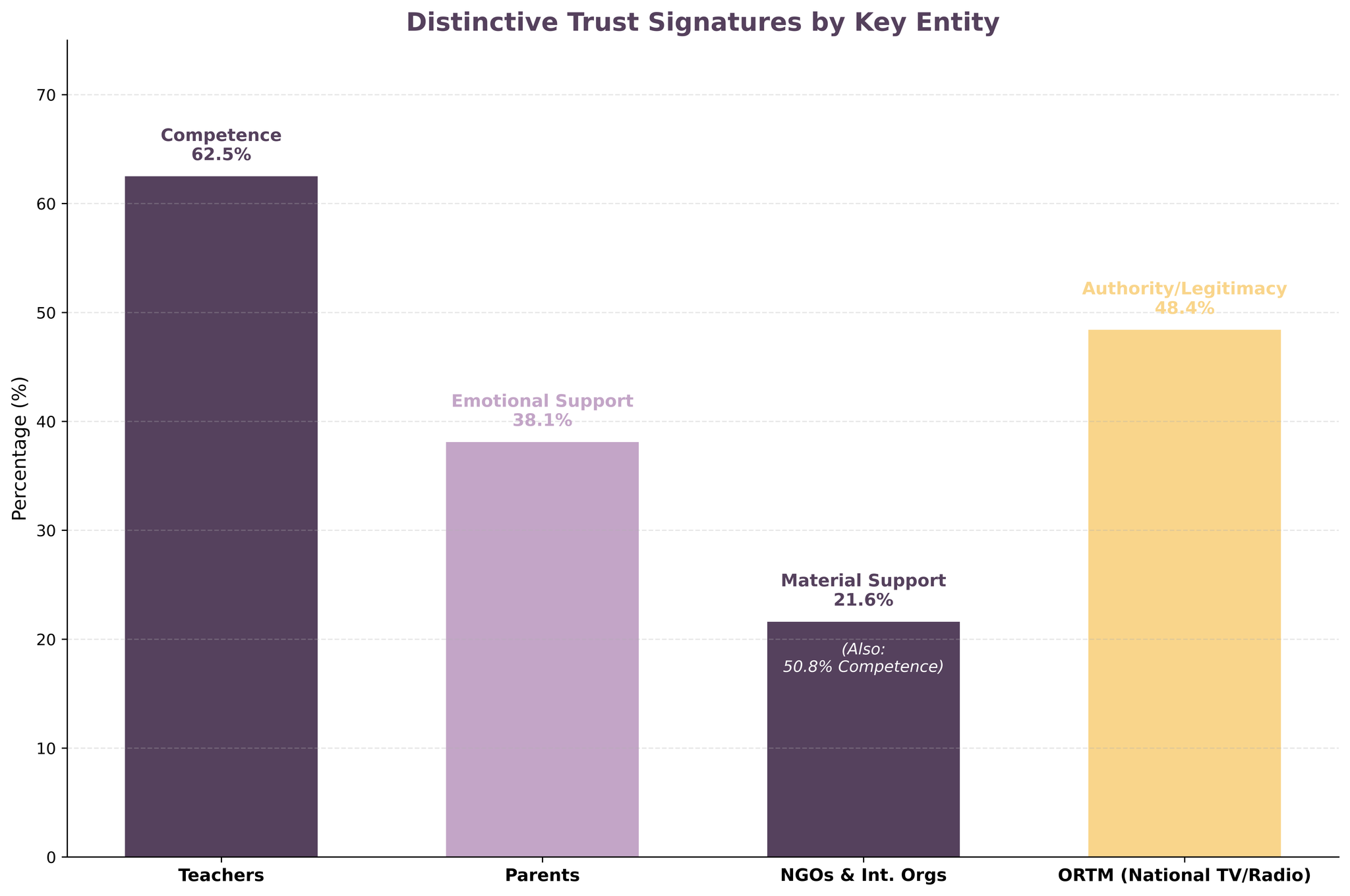
Our data suggests that the register of the message must match the type of messenger. A teacher gains trust by focusing competencies related to the youth. A parent gains trust by showing care. An institution gains trust through shared values.
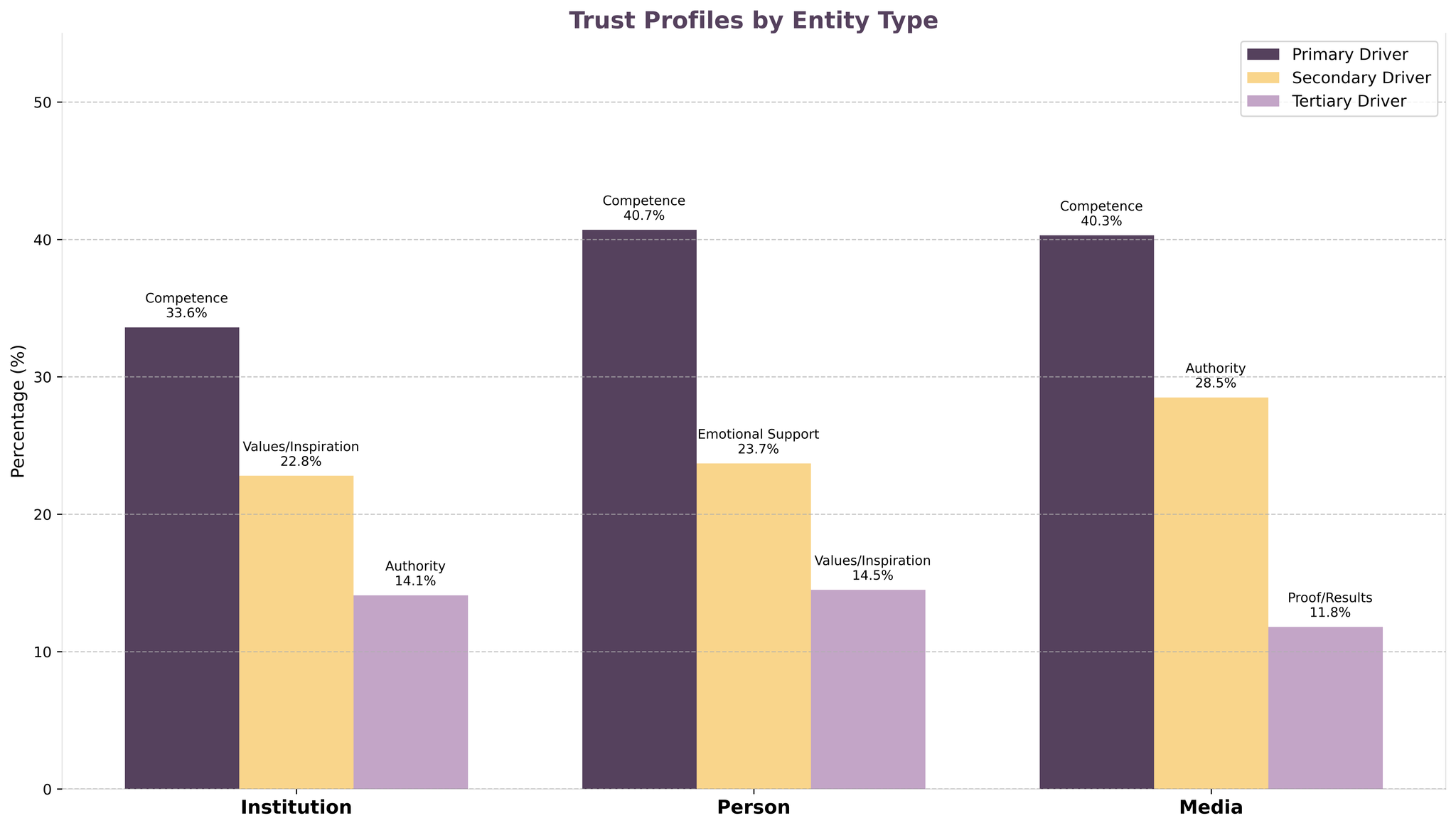
For us, and for anyone designing outreach to youth in similar contexts, choosing the right messenger isn’t enough. You need the right message register for that messenger.
AI-generated tutorial beats the human version, but only at the door
In our February update, we shared that WhatsApp nudges boosted activation by 15.6% compared to push notifications, but had no effect on deeper engagement (session duration, content progression, time spent). We noted the sample was modest (N=271) and wondered whether the activation-without-depth pattern would hold with a different intervention.
Between March 6 and 11, we ran an A/B test on our current cohort in Bamako. Both groups received a tutorial video after completing onboarding, with identical content and calls to action. The only difference was the video production format: one group got a human-recorded screen-capture tutorial, the other got an AI-generated version produced via NotebookLM. The AI video’s transcript was used to structure the human screen-recording, so the information was equivalent.
The sample was well balanced: 414 learners assigned to the human video, 413 to the AI video. Among those who actually read the onboarding message (200 and 202 respectively), the AI video group showed a higher rate of first key action within 24 hours: 14.4% versus 11.0%. That’s +3.4 percentage points, or a 31% relative increase.
But once learners started interacting with the AI Mentor, conversation depth was virtually identical. Active messaging learners in the AI group sent 6.93 messages on average during the 6-day testing window; in the human group, 6.91. The intervention changed who walked through the door, not what they did inside.
Interestingly, the AI video group showed more bidirectional interactions. 0.45 messages receiving replies per active learner versus 0.18 in the human group (+148.6%). And they relied less on the menu keyword “Kabakoo” to navigate (1.19 uses per learner versus 2.12, a 43.8% drop). Both signals suggest the AI tutorial helped learners understand how to interact with the system, not just that they should.
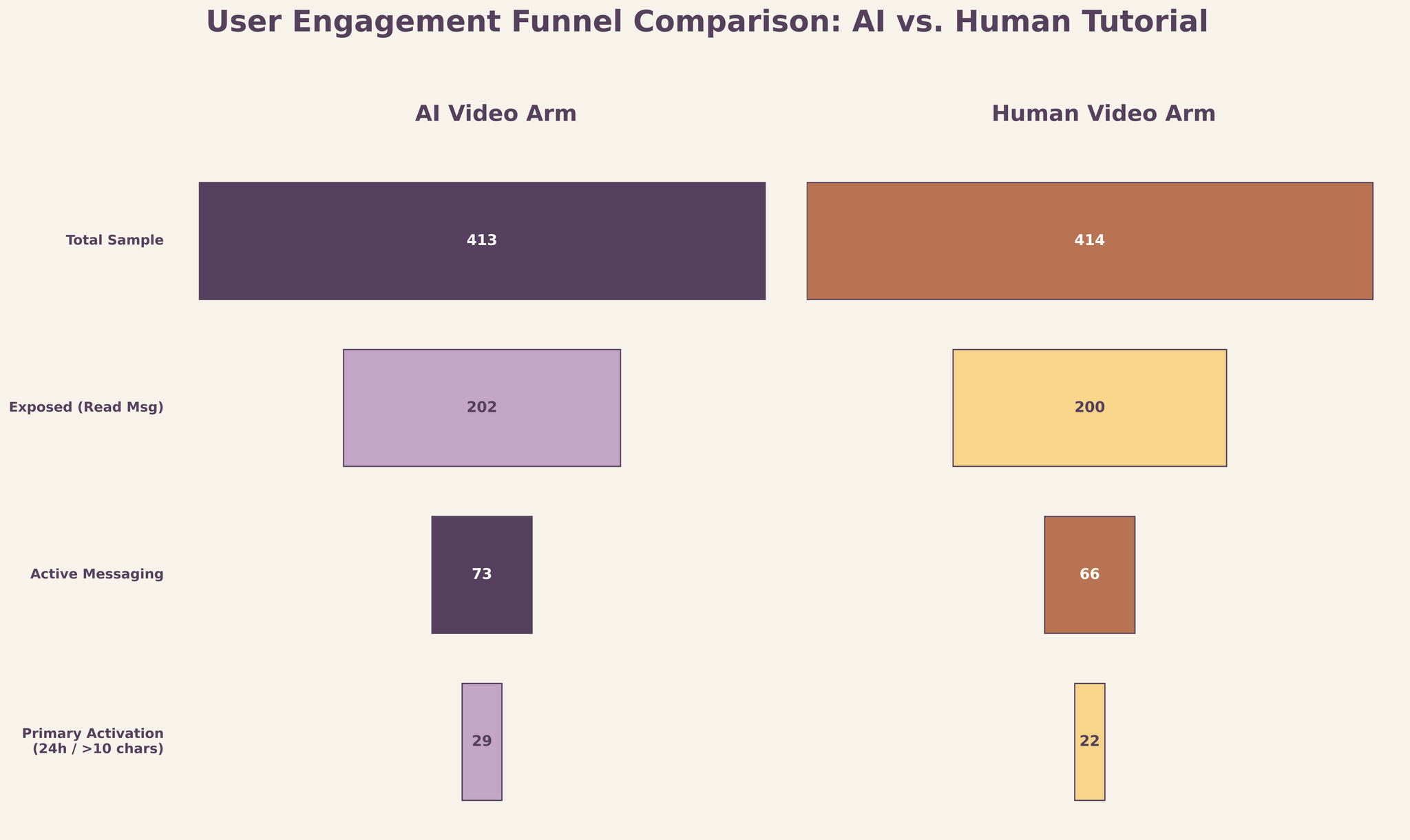
The pattern across our experiments is becoming clearer. Activation seems to be (relatively!) malleable. Small design choices (the nudge channel, the video format) change whether someone takes the first step. Depth of interaction is more stubborn, way more stubborn. We’re designing our next round of experiments accordingly.
What 199 final year Togolese economics students taught us about ambition
Since our exploration sprint in Lomé last December and the partnership with Université de Lomé formalized in January, we’ve been preparing to launch a program targeting 1,000 final-year economics students at the FASEG (Faculté des Sciences Économiques et de Gestion).
Our designers have spent two weeks talking to students on the campus to inform our upcoming deployment. Additionally, we are running a WhatsApp-based survey to potential participants. 266 respondents completed it so far, 199 of them are eligible for the program we will deploy. We hence focus the following analysis on this subset. The survey (and the analysis) is still in progress, but several findings already surprised us enough to share.
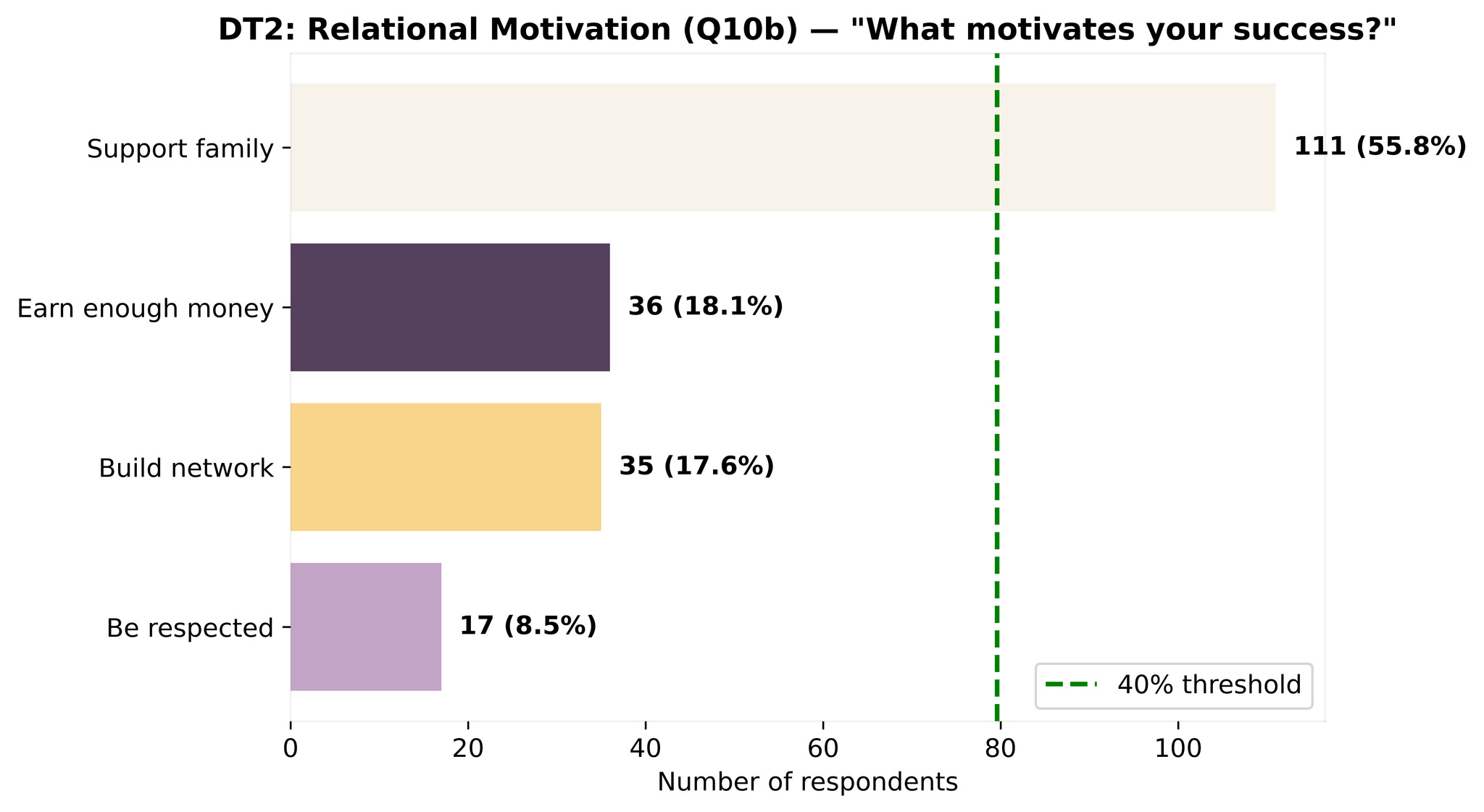
We asked these final year students what motivates them most to achieve their declared career goals . The options were supporting their family, earning enough money, building a network, being respected. 55.8% chose “support my family”. Second place, “earn enough money”, came in at only 18.1%!
This might not be what it’s expected from final-year business and economics students. Professional success is framed as a family project. Arjun Appadurai writes in the capacity to aspire (2004, p. 67) that aspirations “are never simply individual (as the language of wants and choices inclines us to think). They are always formed in interaction and in the thick of social life.” Our data gives that argument a concrete face. These students don’t aspire for themselves alone.
Asked who they’d trust most for career advice, 49.5% said their parents and 18.1% said a professor. Close friends land at only 5.7% and social media at 1.0%!
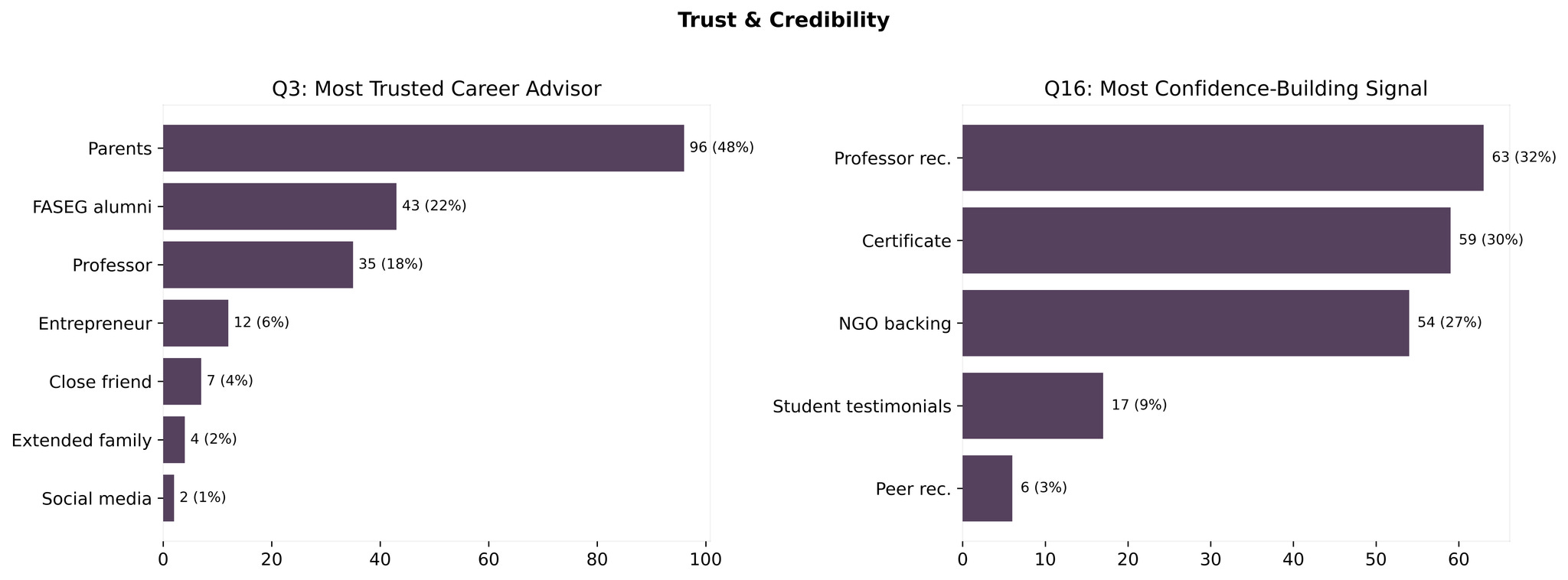
When asked what would make them trust a program like ours, professors’ recommendation topped the list at 31.7%, followed by a recognized certificate (29.6%) and backing from a major NGO (27.1%). Student testimonials and peer recommendations barely registered (8.5% and 3.0%).
Some of this echoes the Mali trust data from earlier in this newsletter at a different scale and in a different country. The cross-country convergence strengthens the signal.
See you at Skoll 🇬🇧
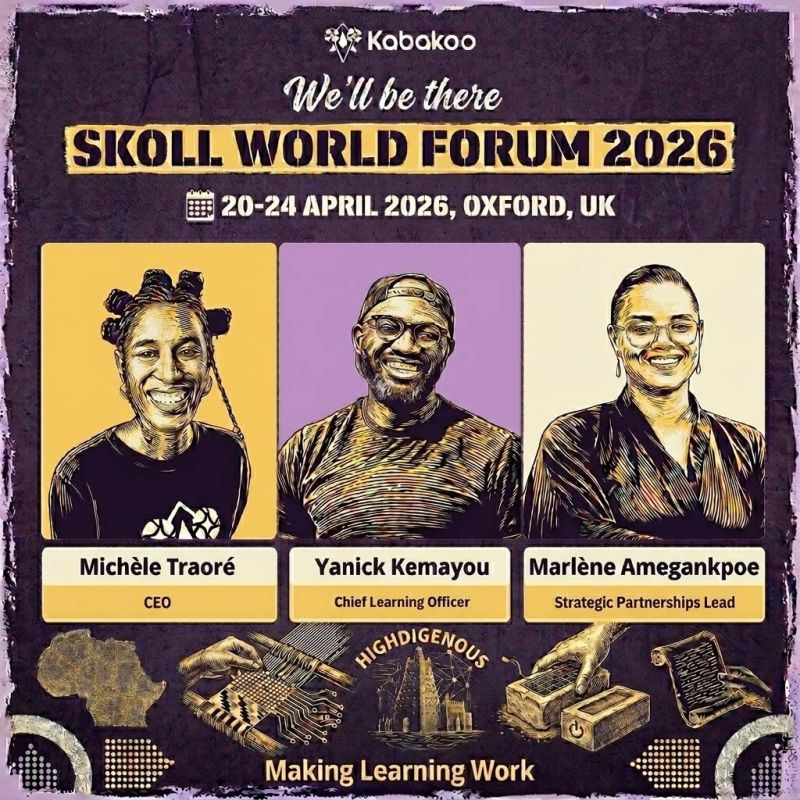
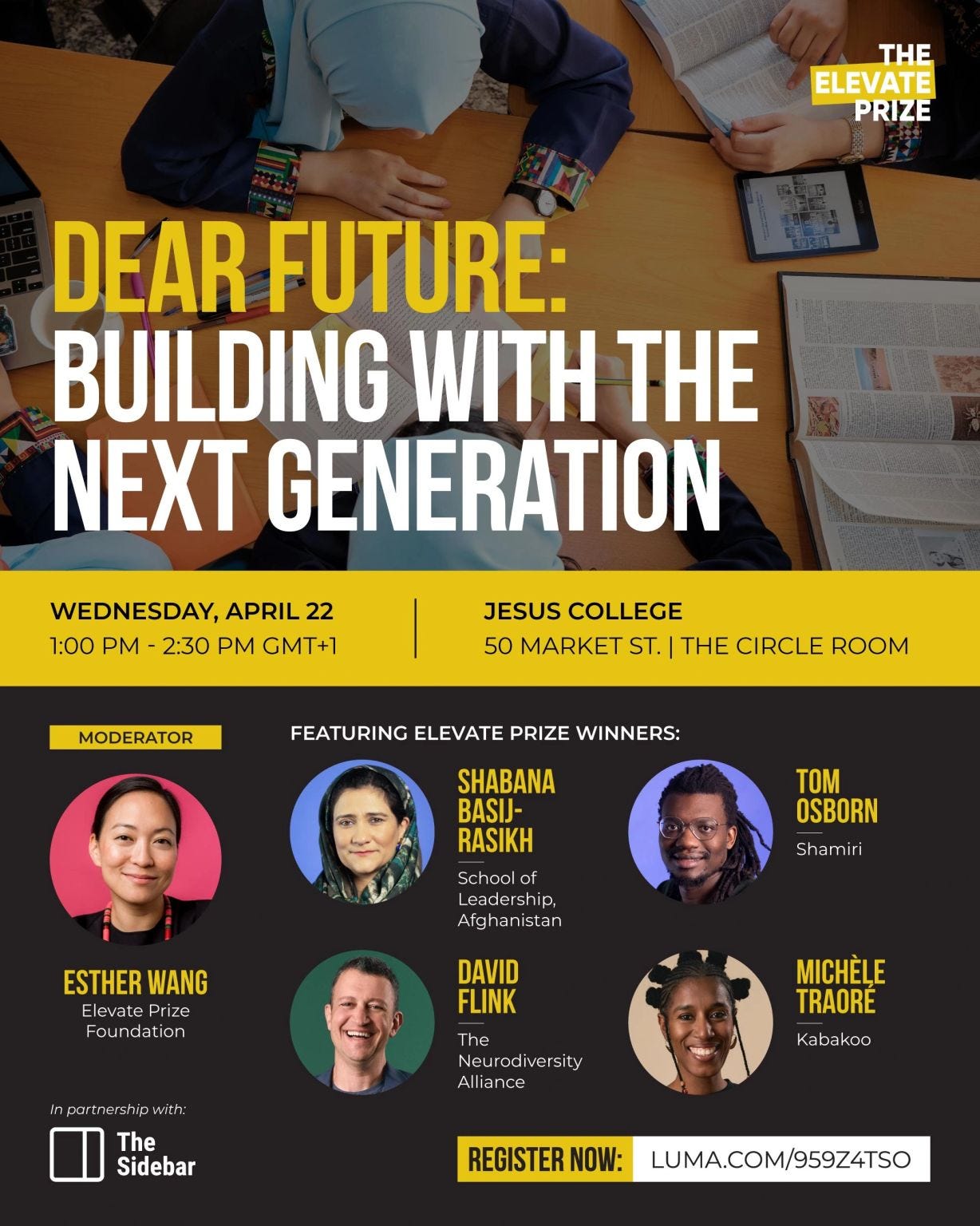
We’ll be at the Skoll World Forum in Oxford from April 21 to 24.
As an Elevate Prize Winner, Michèle is speaking at the Elevate Prize Foundation event “Dear Future: Building with the Next Generation” on Wednesday April 22.
We’ll also be at meetings organized by the Livelihood Impact Alliance. If you’re around Oxford that week, come find us. Or let serendipity do its magic.
Kabakoo Faces
(With over 40,089 registered learners, each month we spotlight a member of our vibrant community.)
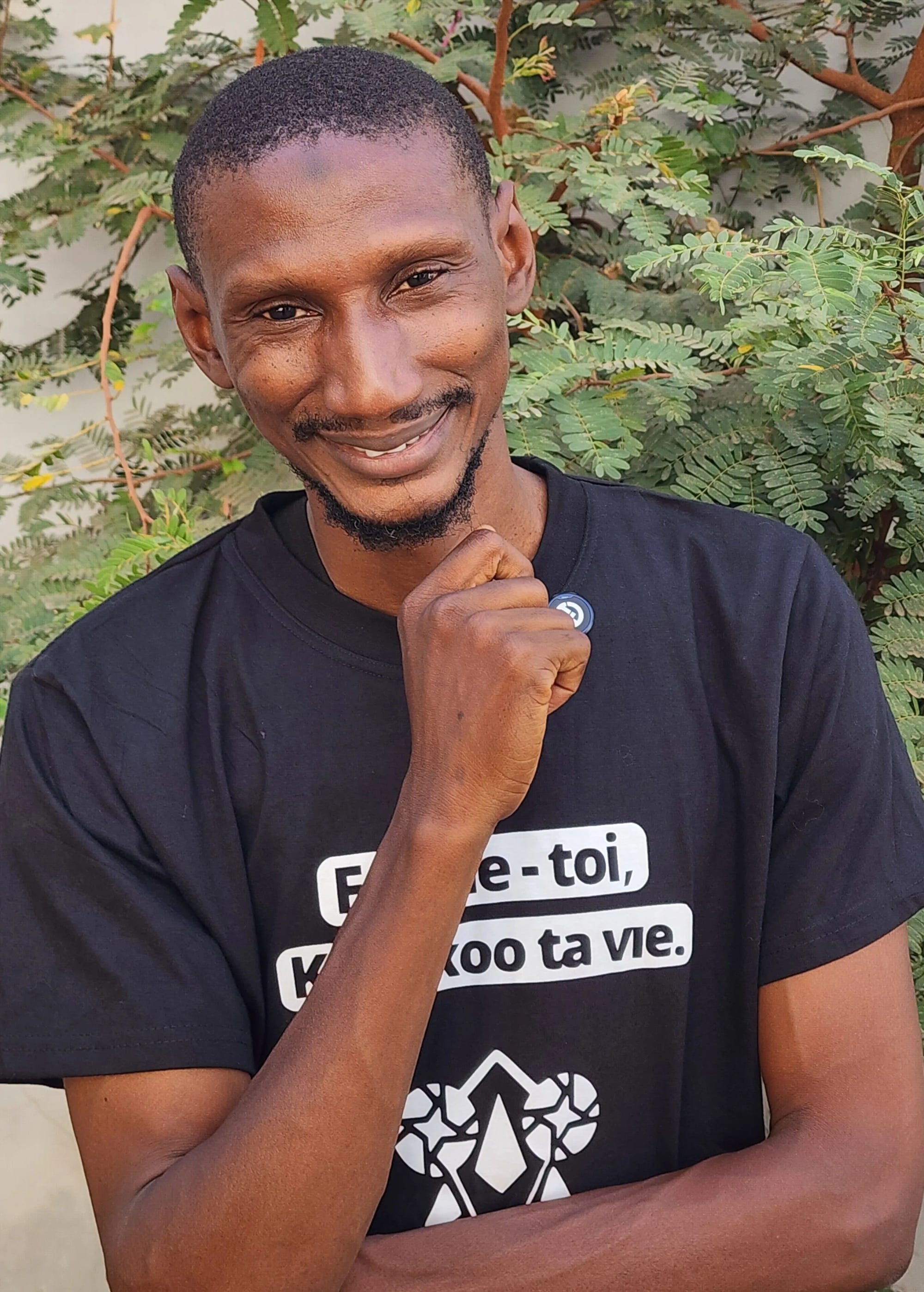
When talking about his time before Kabakoo, Ousmane describes feeling stuck in a loop and overwhelmed. Tasks piled up because he struggled to structure them. Collaboration and teamwork felt difficult.
What changed with Kabakoo is how he approaches learning and work.
Initially interested in 3D animation and XR for his work in the tourism sector, his perspective evolved when he discovered no-code and AI. He learned to structure his workflow and to organize his thinking to approach problems more methodically.
With Kabakoo, taking ownership of his path and showing up consistently in a learning community gave him a level of accountability he hadn’t experienced before.
Today, he is more intentional with his time. He stresses that his family sees it too, they describe a visible shift in his motivation and direction.
As he mentions, the main takeaway of his Kabakoo journey is “learning never stops, and you don’t move forward alone”. Listen to Ousmane’s full story here.
Thank you for reading to the end! 💜🧡
Michèle & Yanick
Enjoyed this newsletter? Let others discover it too!