Hi there, greetings from Bamako ! 💜
At Kabakoo, our daily work consists in permanently connecting research with the realities of our spaces on the ground.
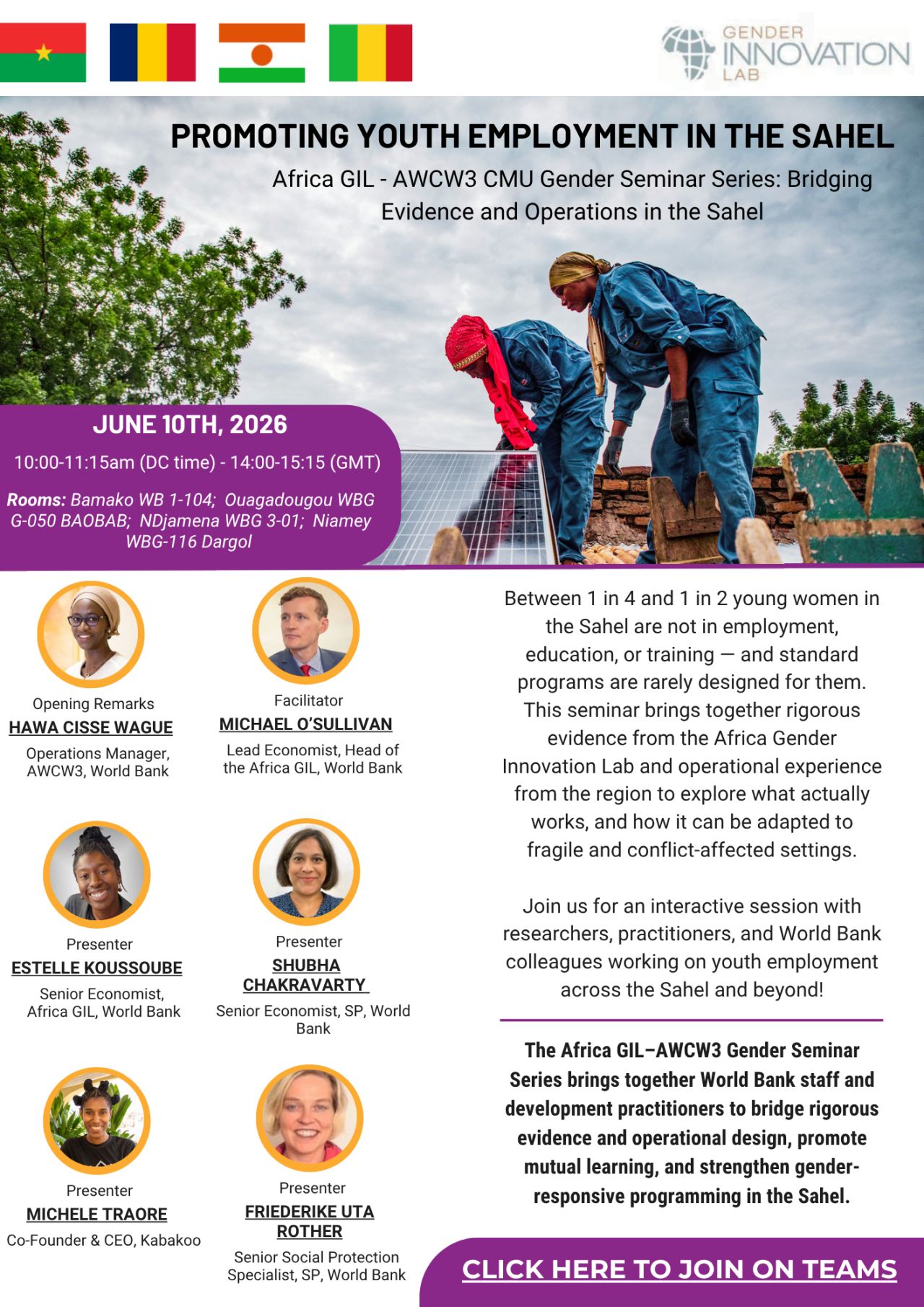
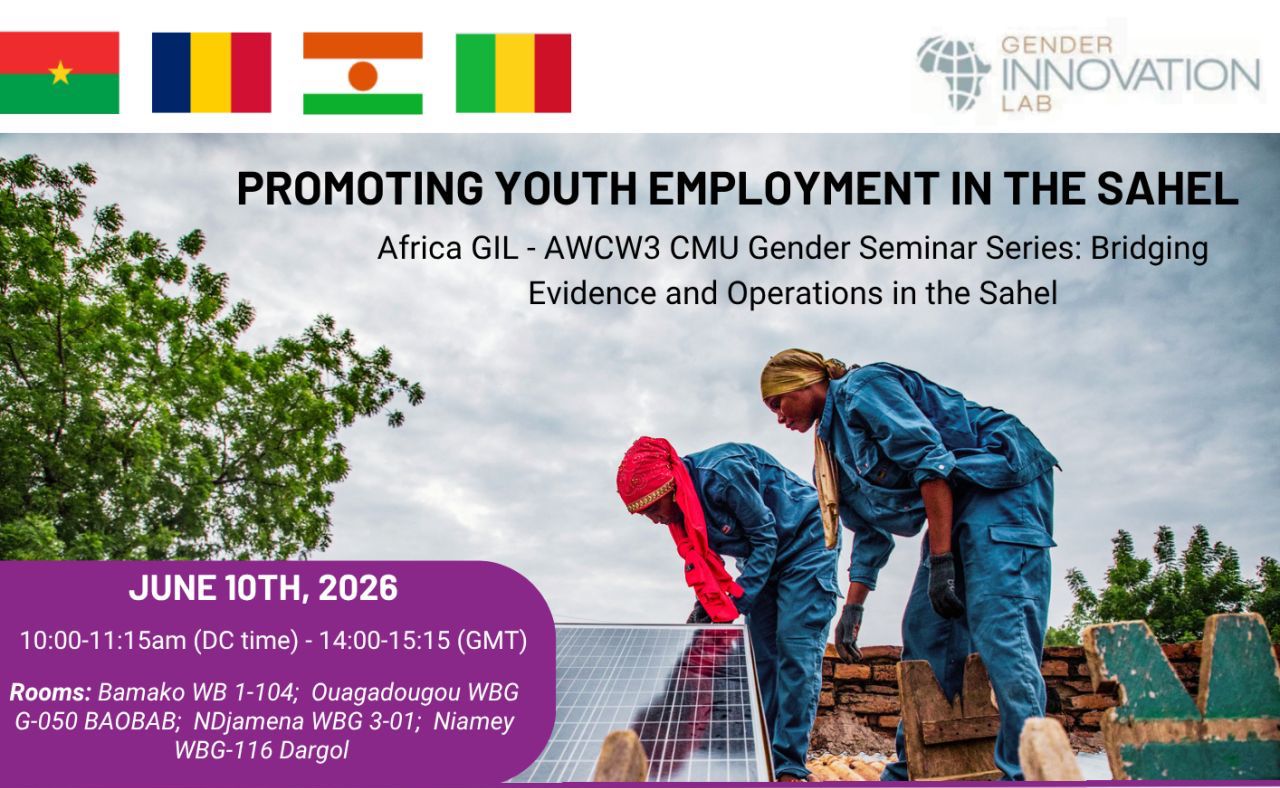
It is exactly this duality that takes center stage today, Wednesday, June 10, 2026. Our Co-Founder & CEO, Michèle Traoré, is carrying Kabakoo's voice at the World Bank seminar organized by the Africa Gender Innovation Lab (GIL), under the theme: “Promoting Youth Employment in the Sahel: Bridging Evidence and Operations”.
Between 1 in 4 and 1 in 2 young women in the Sahel are not in employment, education, or training.
Not because they lack ambition. Because standard programs were never designed for them.
Michèle joins the Africa Gender Innovation Lab to present what happens when you design differently, for the realities of the Sahel, not for the formal-economy fiction. And for us, designing differently starts with the rigorous experimentation of our own data.
To feed this approach, we have just closed a 6-week field experiment aimed at testing a simple hypothesis: if we publish 70% of content featuring female faces on our networks, will we manage to break the psychological barrier and attract more women physically into our spaces? We played the game all the way, reaching 76% of female representation in our recent content (Kabakoo ta vie testimonies, Dogokun Soro, extracts from Highdigenous Talks). The first signals are particularly encouraging: we recorded a spectacular +376% boom in private messages (DMs), a 6-point increase in the female audience on our videos, and above all, the spark physically caught with the arrival of the first young women in our Space 1.
But true to our culture of data and transparency, we refuse hasty conclusions. This experience also pushed us to remain vigilant regarding two realities:
- on the one hand, the "Djidaga" Paradox — where a massive spike in discussions was triggered by a video on heritage presented by a man, proving that the cultural power of the topic remains the primary driver of action,
- and on the other hand, the statistical bias of small samples, which requires us to interpret the increase in our female registrations with great caution. Life happened, the tracking of our physical entries experienced some glitches, and that too is the reality of the ground.
It is precisely this unfiltered work, combining cultural intuition and scientific rigor, that Michèle is sharing today with the World Bank teams and seasoned economists like Michael O’Sullivan and Estelle Koussoubé. So that learning and opportunities can truly circulate in the Sahel.
A huge shoutout to the teams for this analysis work, and sending Michèle good vibes for her presentation! ✨
See you very soon for the next adventures! 💜🧡