September 17, 2026

Kabakoo: Monthly update 08/2026

Written by:
Michèle Traoré & Yanick Kemayou

This newsletter is meant to be read, enjoyed, and shared. If you reply to it, we will be very happy and will write back.

Welcome to our monthly update!

We hope you are able to find some peace to indulge in the slowly progressing changes of the Nature around us that the end of August is bringing. Be it the end of summer, or as in Bamako right now, the intense phase of a rainy season.

This edition covers the launch of our state-backed national program in Mali, the internal debate that cut our baseline survey from 70 questions to 20, and how we test whether our AI Mentor actually works. In the next weeks, you can catch us in a couple of cities. Read on to know which ones 🙂

Our jam of the month is “All We Know” by Chelsea Carmichael, a jazz saxophonist whose debut album was the very first release on Shabaka Hutchings’ label, Native Rebel. This says everything.

What are we building?

🔗


Kabakoo is a research and implementation WorkTech headquartered in Lomé and Bamako. We design and scale evidence-based pathways for West African youth, integrating AI, community, and cultural insights to foster the mindset and skills essential for achieving economic mobility and driving systemic change in informally dominated economies.

Below are our highlights from the last weeks.

☀️ Scaling Kabakoo inside existing government channels in Mali

🔗


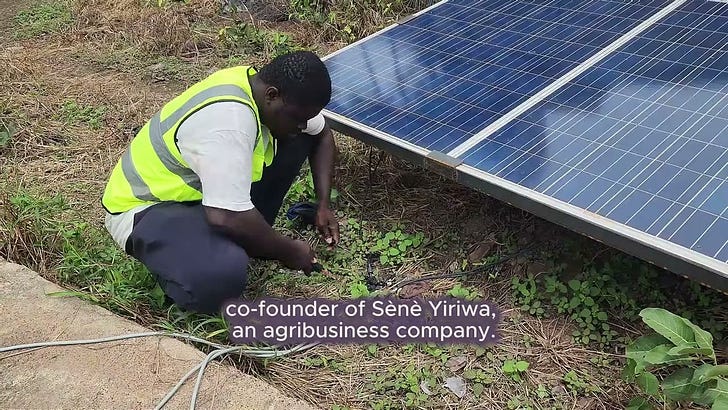
The biggest news of the last weeks: we are officially starting enrollment for the first cohort of our national upskilling program, launched under the authority of Mali’s Prime Minister and the Ministry of Digital Economy. This builds on the agreement we signed with that ministry in January 2026, a shared ambition to upskill 15,000 young people across Mali by the end of 2027.

In July, we contributed as a strategic partner to Mali’s National Digital Week (SENUMA). This is our third participation in this major public event in Mali, organized by the Ministry of Digital Economy (see here for our first participation in 2024 during which the three ministers in charge of the digital economy from Mali, Burkina Faso and Niger live-tested our AI Mentor).

In our collaborative upskilling initiative, the Malian government is committing real resources only a government can bring to the table: public training facilities across the country, trainers from state agencies, introductions across ministries and agencies, land for a future campus, and airtime on ORTM, the national TV and radio network.

That last one is special to us. As we reported in our 04/2026 update, when we coded 5,122 open-ended responses on why young Malians trust whom they trust, ORTM stood out. It derives nearly half of its trust (48.4%) from authority and legitimacy alone. A Minister announcing enrollment on ORTM speaks in exactly the currency that matters to young Malians.

Below is one of the spots that will soon air nationally, with the Minister himself announcing the enrollment and inviting young Malians to apply.


Beyond this nationwide upskilling initiative, our three-year convention with Mali’s Ministry of Digital Economy mandates joint studies of digital’s impact on the economy and creates a standing committee to evaluate results and recommend policies.

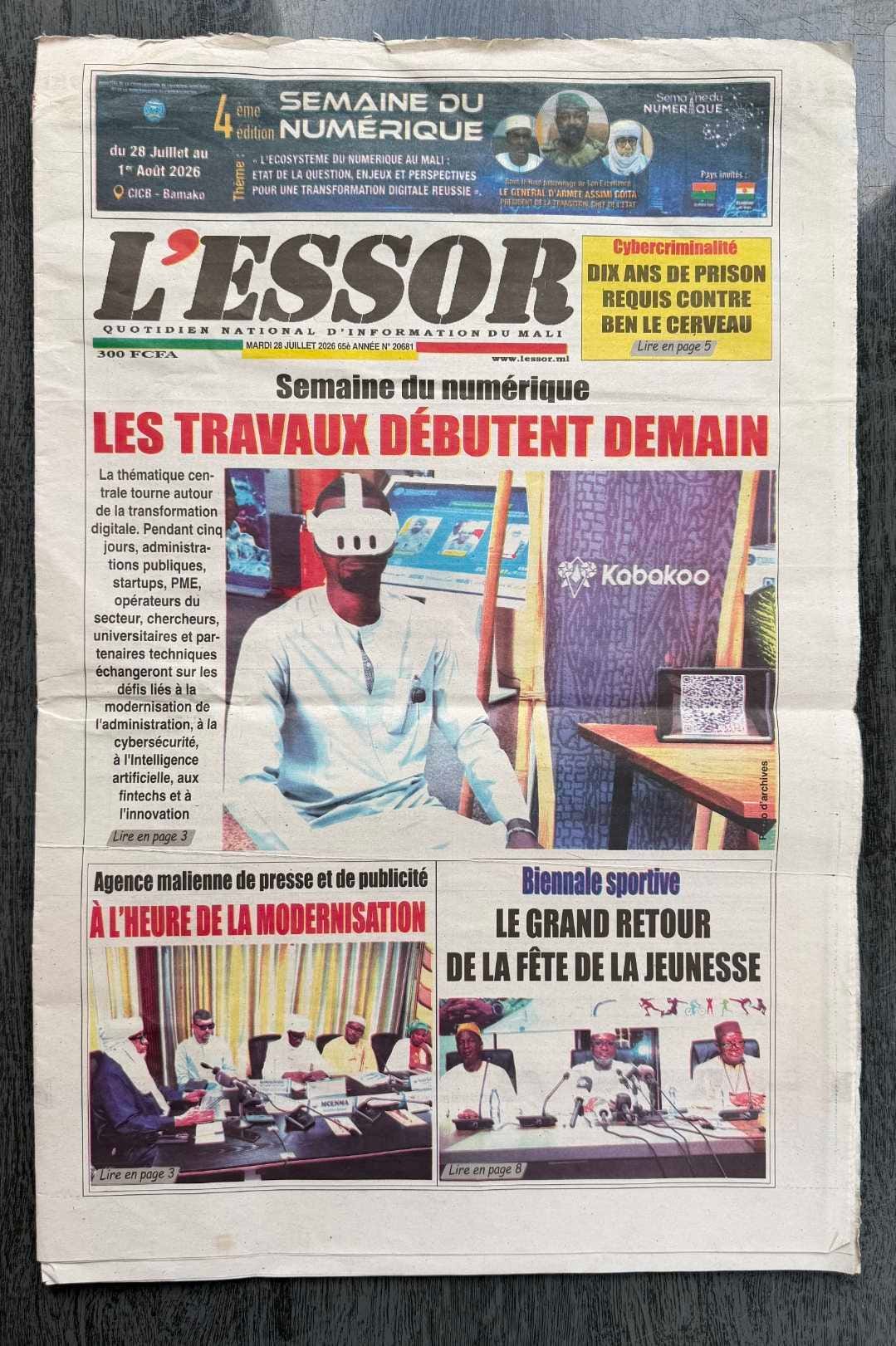
Kabakoo on the front page of L’Essor, the state-owned national daily.


This program is only the visible part of years of work with Malian public institutions, from digitizing public vocational training centers, to three editions of SENUMA as a strategic partner, and being selected by the Malian Ministry of National Entrepreneurship, Employment, and Vocational Training as a representative of the digital sector.

If you know organizations or individuals willing to support and scale this kind of government-embedded work in the Sahel, please send them our way. This is a rare opportunity.

Kabakoo learners ran the show

🔗


This year’s SENUMA also put learners’ projects and trajectories on a national stage. As usual with all events at Kabakoo, the SENUMA provided multiple applied project opportunities for learners. In fact, Kabakoo’s operational participation was run by learners from the community who took charge of our presence at the event. For five days, they welcomed visitors, demonstrated projects and technologies, produced content and guided people through the enrollment process, interacting with audiences they had never met before. Then they reflected on the experience via the portfolio feature of the Kabakoo upskilling platform.

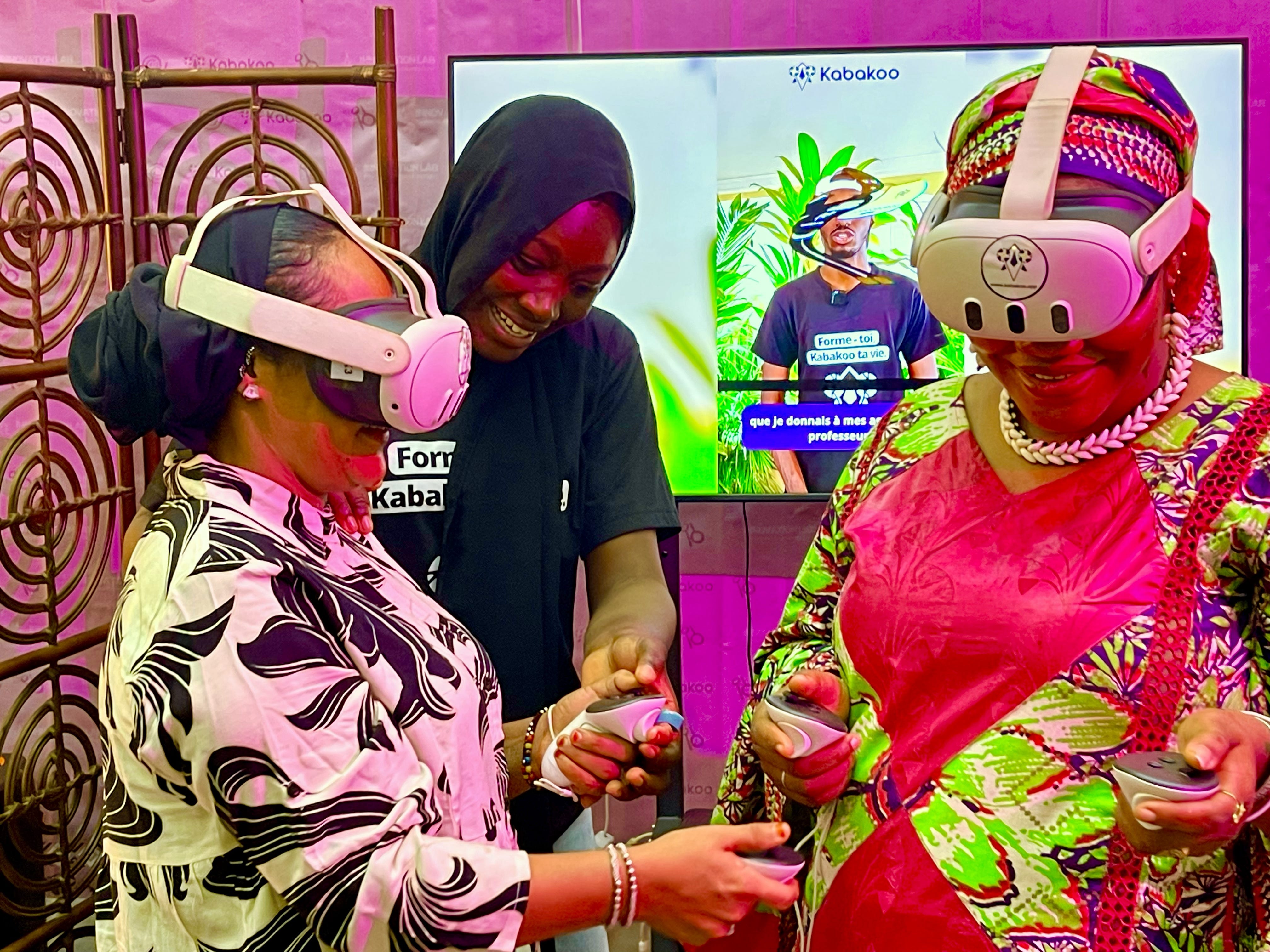
Afou, a Kabakoo learner guiding visitors through VR experiences.


Fatoumata, one of the learners from the Kabakoo SENUMA squad, moved from struggling to approach visitors to proactively presenting experiences and conducting interviews. Her reflection captures particularly well how applied learning happened throughout the experience: “I really learned to bounce back because I was practicing, learning and enjoying everything at the same time.”

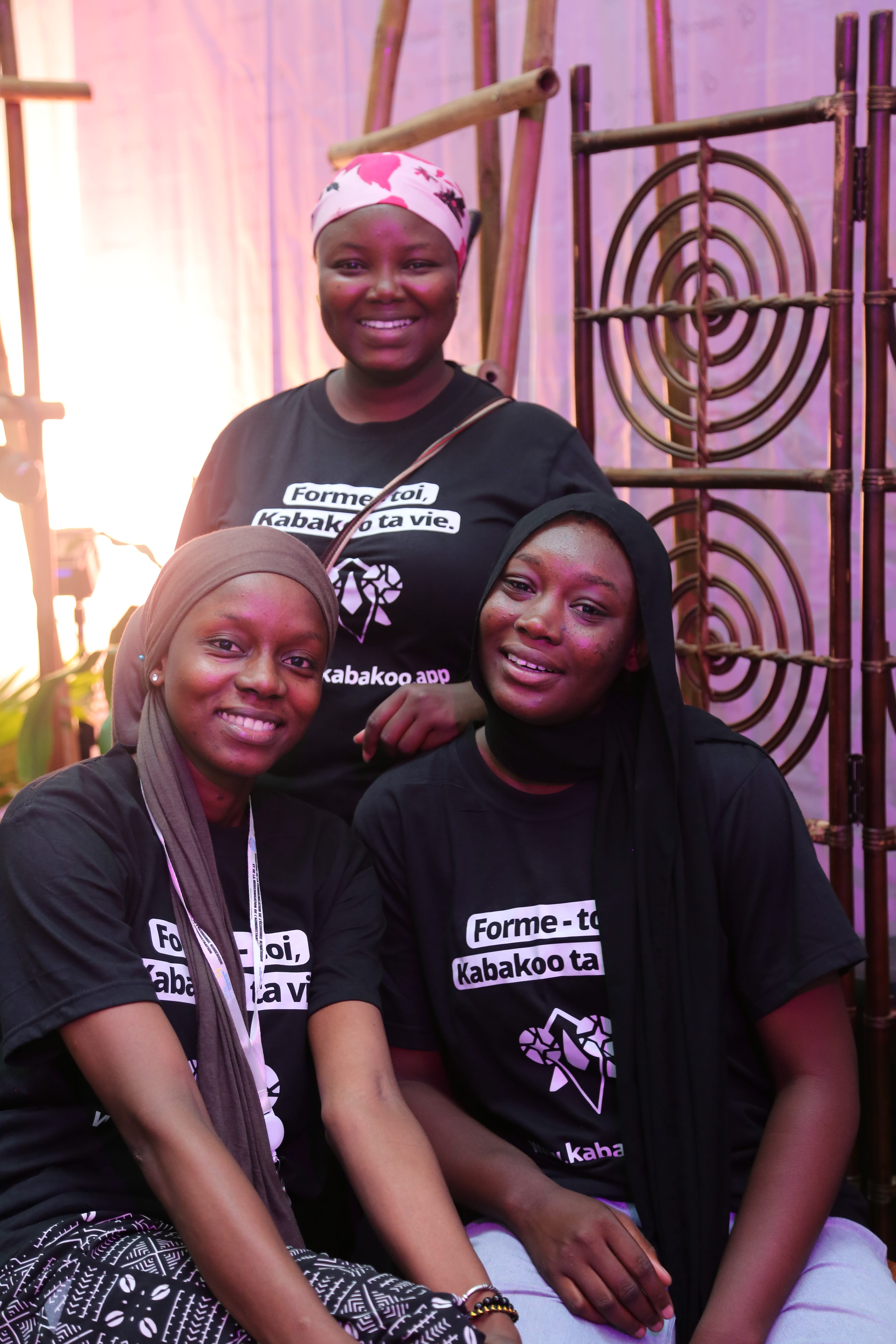
Rahmatoulaye, Fatoumata and Afou, Kabakoo learners running the show at the SENUMA, Bamako.


Despite the high-profile attendance of the event and its institutional dimension, learners’ reflections were more about what they managed to achieve themselves. They made learning work.

Ask less, observe better

🔗


During the last weeks, we had some heated conversations that are probably changing how we do measurement (and evidence generation) at Kabakoo.

Here is the situation: Over the past few months at Kabakoo, we have been exploring how to simplify our baseline survey. Used across our cohorts, the baseline establishes learners’ (and controls’) starting conditions against which we can later measure change and impact following participation in our programs.

A 35-40 minute questionnaire comes with real costs such as learner time, survey fatigue, and subsequently high drop-off. Obviously, the more we scale (think of the gov-backed national program above), the more this cost compounds.

So we went back to our existing data. We reviewed six years of baseline and follow-up data; we then tested how much information shorter versions could preserve.

One of the first things we learned was that reducing questions does not scale the way we expected. A 32-question questionnaire retained only about 54% of the information in the original full questionnaire (60-70 questions). At the same time, a 52-question version preserved more information, but exceeded our 15-minute target.

This pushed us to think (and debate) harder. What if we approached baseline surveying as a journey, not as a single-point observation? Access, platform fluency, completing a meaningful action, receiving feedback, revising work, collaborating with others, could all teach us something for evaluation.

Now, imagine a room of (product & learning) designers and (quantitative) researchers and engineers. Guess who was saying “we absolutely NEED these 70 questions!!!”

Our internal paradigm now is moving toward a system that asks little, very well, and shifts the rest to observation. This is consistent with the lesson our gender data taught us a couple of weeks ago. As we reported in our 07/2026 update, in the same sample of learners, barriers tied to social norms surfaced far more in video reflections than in written portfolio entries. Increasingly aligning measurement with observed behavior basically turns that finding into our evaluation design.

The discussion is still open on what this means for the richness of the counterfactual data the current system produces. Though our 05/2026 finding tempers the worry. Due to remarkable spillovers, only 96 of our 369 original controls were still “clean” at 12 months. The pristine comparison group our quant researchers are protecting is eroding anyway. Probably because we are running an intervention with a strong social layer, with some degree of success; strong spillovers are actually to be expected. Happy to have your thoughts on this!

Starting with the next cohort, instead of trying to capture dozens of signals in one large questionnaire, we will spread measurement across the learner’s journey. The baseline is now down to roughly 20 simple questions and takes less than 10 minutes, followed by short check-ins and follow-ups over time. Wherever behavior can be observed directly through learner activity, we aim to measure it.


How do we know our AI Mentor really works?

🔗


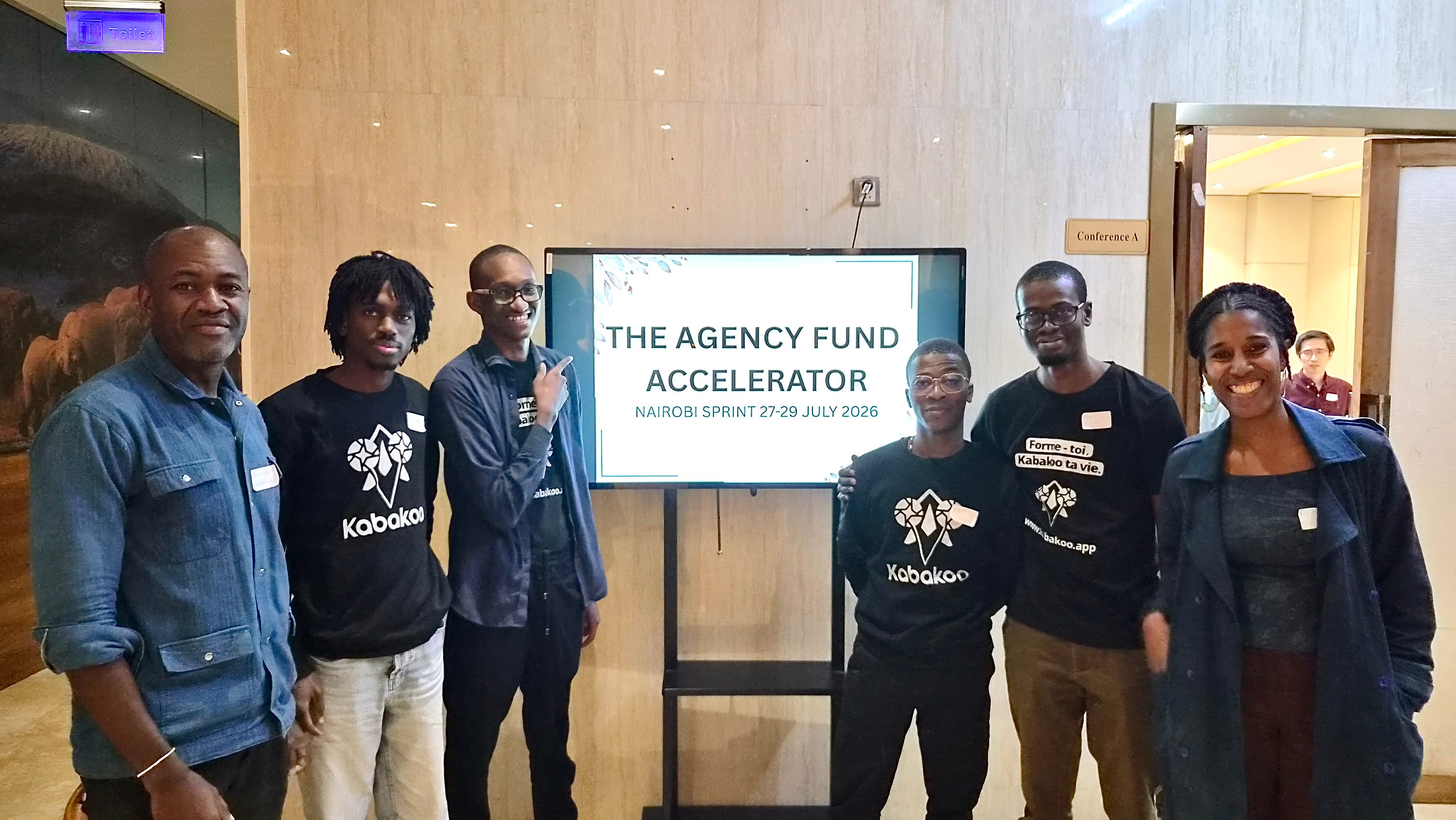
The squad representing Kabakoo at the 2026 Nairobi Sprint of the AI for Global Development Accelerator.


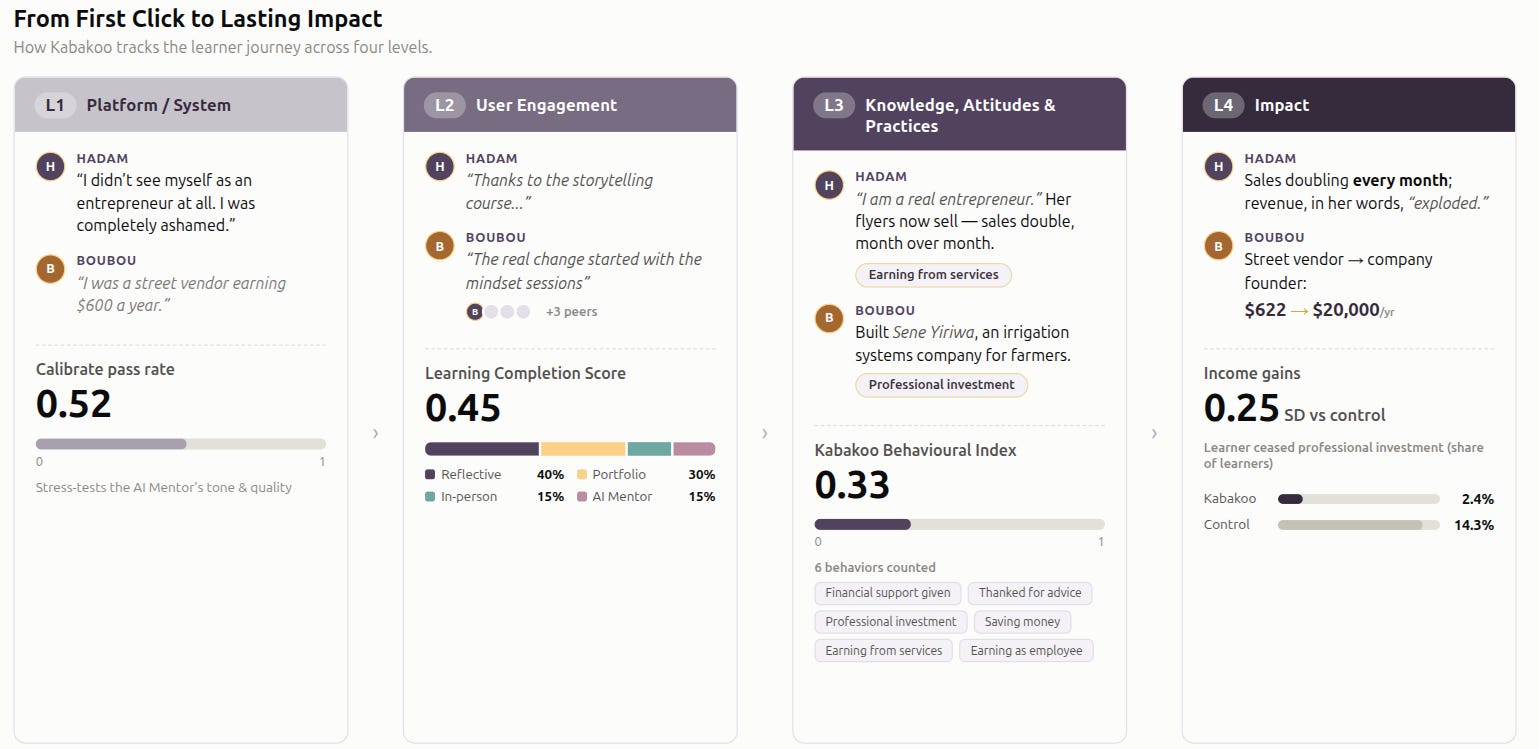
As Michèle wrote from Nairobi in our last month’s update, we spent July 27–29 at the sprint of the AI for Global Development Accelerator. In conversations, workshops, and building sprints, we ran our learner journey through the four-level AI evaluation framework developed by The Agency Fund and the Center for Global Development.

The framework helps us examine what it actually means for our AI-enabled upskilling system to ‘work’, acknowledging that a functioning AI is only the starting point.

Each of the four levels therefore answers a distinct question, and for each question, we need a different type of evidence. A model test cannot establish socioeconomic impact. A retention chart cannot establish learning. A moving story cannot establish causality. Those forms of evidence do not necessarily mature in a clean sequence. We have long-term evidence for parts of Kabakoo’s hybrid program while still facing basic retention and engagement questions in the current cohorts; and every change to the AI Mentor also creates a fresh Level 1 test.

The 4-Level framework at Kabakoo.


If you want to know how we make AI work, i.e., how we operationalize and instrument the four-level framework at Kabakoo (including fails and wins), you need to read this piece by Yanick 👇🏿

The AI worked. Did it work for the learner?

The AI worked. Did it work for the learner?

Yanick Kemayou · Aug 7
Read full story

Let’s meet! 🇩🇪 🇫🇷 🇦🇹 🇺🇸

🔗


In the next weeks, we will be traveling for meetings in Germany (Düsseldorf & Paderborn), Paris, Vienna, and the USA (mainly New York for UNGA-related events, and Princeton where Yanick will speak at the Conference on Agency in Institutional and Human Capital Development).

If you are reading this, we would probably enjoy each other’s company for a coffee/tea and a conversation about building the economic mobility infrastructure in West Africa, especially by pairing cultural and community insights with AI-powered learning.

Also, if you know anyone we should meet around these cities, please forward this to them.

Kabakoo Faces

🔗


(With over 43,373 registered learners, each month we spotlight a member of our vibrant community.)

Meet Mona S., learner at Kabakoo.

Before joining Kabakoo, Mona, from Burkina Faso, was pursuing her dream of becoming a fashion designer. After completing high school, she couldn’t afford university. She later enrolled in a fashion design training center while working at the same time to finance the tuition herself.

She discovered Kabakoo by word of mouth and joined the Fashion & Music Biz Track of our marquee Digital Makers program.

“Before the program, I knew absolutely nothing about computers. I could turn one on, but apart from that, nothing more.”

Through modules such as web design, no-code and Gen AI, Mona learned to use digital tools. Via the tasks embedded in the mindset and value creation modules she started structuring the business she wanted to build. She clarified her long-term vision, developed her brand’s name and identity and ultimately launched her entreprise.

Her biggest transformation, she says, came from how she started to see her own possibilities, and from the clarity she gained about how to get to her goals.

“Before Kabakoo, I would tell myself: in five years, or more. But in one year, I’m now managing to do what I thought would take me five years.”

Mona now confidently works as an artistic director, and already collaborates with several artists.

Watch Mona’s story here.

Thank you for reading to the end! 💜🧡

Michèle & Yanick